Today is the time for being digital . Everything is becoming digital these days. Today is the time for globalisation. These Technologies and techniques has a huge impact on our day to day work
Technology has brought many changes in various fields of work .so, why should our courts be left behind in this race?
Indian courts are very well known for their pending cases. There are huge number of cases pending in our courts. In India, there is a saying that Justice delayed is equal to justice denied. It means that if justice isn’t achieved at the right time, then there is no use of that justice
People have almost lose faith in the judiciary system. So, here is such a technique which helps in the administration of justice. To be in a race, an initiative has been taken by our courts which is Online Dispute Resolution. Basically, it means a solution to disputes by using digital techniques and technologies.
ODR:
Online Dispute Resolution, is a latest communication method for the settlement of disputes between the parties.
Article 21 of the Constitution of India:
Under article 21 of the Constitution of India, it is being mentioned that, ‘No person shall be deprived of his life and personal liberty except by the procedure by law.
Case law: Hussainara khatoon vs. Home Secretary state of Bihar:
In this famous case, it was said that right to speedy trial is a part and parcel of right to life and personal liberty.
Traditional method of dispute resolution or Online Dispute Resolution?
With the change of time, one has to change itself as well. For many years we were dealing cases with the traditional methods. But COVID 19 has at least a good impact. With this, a new initiative has been emerged, which is Online Dispute Resolution. It’s an alternative to the old and old year’s method of dispute resolution.
Ok! I will ask you one question, Which takes more time, litigation filed in court or Online dispute Resolution!? Think and you will get the answer why ODR is better!
Advantages of ODR:
Apart from being convenient, it is time effective as well.
Provides an efficient way of resolution of disputes.
Cost effective For example: Just think about 2 parties, who are at a huge distance from one another. So, ODR helps a lot in saving travel time. It is a very creative method of resolution of disputes as generally the court proceedings are very formal and take much time, but this ODR method is very flexible. It’s the best method for those parties who could not afford the high cost of litigation process. So ODR provides a relief in terms of cost as well.
Speedy trial.
Promotes speedy access to justice.
ODR technique is very easy to access. It can be accessed anywhere from the world where internet is available.
Apart from quick disposal of cases, the best advantage of ODR is that it will give employment to many arbitrators and advocates. This ODR can be proved boon in many cases.
Storage of voluminous data:
In India, one such issue which courts have to face is the storage of large voluminous data. But with the advent of ODR, this issue can be solved easily.
Disadvantages of ODR:
Those people who lack in terms of technology, will be at disadvantage of using ODR technique.
Due to some language issue, some people can also face some communication problem.
Mode of Doing Online Dispute Resolution:
For solving disputes, ODR uses a combination of online and offline methods.
Types of Online Dispute Resolution:
Mediation: In this type of dispute resolution, a neutral person is appointed basically. In simple words, we can say that a third party person solves the disputes by firstly listening to the parties dispute and then trying to resolve the issue. And whatever mediator says, it’s up to the parties whether they want to accept on that term or not.
Arbitration: In this method, the parties approach the arbitrator and seeks his help for the resolution of the dispute.
Advantages of Arbitration:
It is less formal
It is time effective. As proceedings are completed in lesser time.
This method is less complicated as well.
This method saves travelling time as well as travelling expenses.
Negotiation: Negotiation means making some counter offer or some type of concession so that parties can come to an agreement.
Role of ODR Neutral:
The main aim of the neutral person is to solve the disputes between the parties. And in this process, he plays a very important role as firstly he discusses with both the parties about their main issue of dispute and then after listening to both the parties, he counsel both the parties to solve their dispute.
Characteristics of Online Dispute Resolution:
Informal: The proceedings under ODR are generally informal. Proceedings through Online Dispute Resolution are quite relaxing.
Confidential: ODR is a very confidential process.
Significance of ODR:
COVID 19 pandemic is still continuing in India. Due to which many courts re closed. The importance of using Online dispute resolution lies in the fact that it’s a great step towards providing justice.
Aim of ODR is to get everyone access to justice.
Impact of Online Dispute Resolution:
With the emergence of Online Dispute Resolution, the way of dealing cases has been changed. With the emergence of this method, now the court is making use of this in solving all disputes matters. As court has to invest their lot of time, but this method of ODR has been proved to be a boon for them.
It helps to solve disputes at a faster rate.
This method has proved to be satisfactory.
This method of ODR has eased the method for courts.
Role of Online Dispute Resolution in Covid 19 pandemic:
As the world is facing a huge pandemic this time. And till now it can’t be ascertain that when this Covid 19 situation will gonna be end!
Although in India, there is a problem of delayed justice. And this Corona virus has made this even worse. Already our courts are having a lot of pending cases.
But to avoid all this, a new initiative of ODR can be used.
As in Covid 19 pandemic, it is being advised to stay away from people at a distance to avoid the virus then such a technique like ODR is very useful. As by using Online Dispute Resolution, people does not have to appear in a court room, and that’s the best way of doing social distancing.
ODR which was earlier in an initial stage has now gained so much importance due to COVID 19.
Disputes are a way of life:
Disputes are a part and parcel of life. They are never gonna end. But the way for dealing with them can be changed. The way of resolving disputes can actually have a positive impact on the people. If justice is delivered to the people at right time, only then they can have trust on us.
Challenges of ODR in India:
There are many obstacles in the way of ODR in India, due to which it has not been able to grow itself.
One such challenge is lack of communication.
Inadequate techniques
Negative mindset of lawyers
Lack of literacy
And the most important issue is about it’s admissibility in the court. Some judges don’t administer these type of proceedings.
Conclusion: Justice is the main aim of Law. And it’s the best time to change the way of providing justice. Because everyone knows disputes are still gonna come, but what we can do is to change their way of dealing.
The best way to handle disputes in a cost-effective manner is by using Online Dispute Resolution.
We can say that Online Dispute Resolution has wide scope but in India we need more of its implications in cases.
As everyone is adopting internet more and more in his life, then why court should stop itself from using the latest technologies in the matter of cases?
Justice is the necessity of the present time. Everyone should get justice at affordable costs. Our government, we people should ensure that justice is delivered to all those who need it. India needs an effective mechanism through which ODR can be used.
Each and every child has by birth has capability to grew up and gain his full potential and contribute wholly towards the development of the society and its nation. The Indian constitution provides children there priority for their protection and providing proper and lawful care, treatment and even spreading education of adopting children for a friendly approach by the society. All the children borne are innocent by birth but due to prevailing circumstances and not getting proper guidance and upbringing there nature become aggressive and they get involved in serious crimes of the society.
If any child who have not completed the age of 18 years and does an offence which disturbs the public peace of the society Juvenile Justice Act 2015 sees the prima-fascia of the circumstances that whether the offence was committed with or without criminal intention. It may be that the child lacks behind the capability of judging the consequence of his crime.
Then under these conditions he should be given personal treatment which converts his mindset to lawful and social work and the treatment should be based upon his economical, physiological and social background upon seeing the circumstances [i]. It is believed that about 53% of children in India face some forms of sexual abuse in India.
According to POSCO Act 2012 child is any person who is below 18 years of age and does not have capability to understand the seriousness of the crime he had been committed.
There was a basic necessity of POSCO act as:
The main aim of this act is to protect children from sexual offence in the society and establish a special court for rapid disposal of case and proper and delicate looking into the cases and being very sensitive matters to be looked upon.
The best thing about this act is that it provides remedy and punishment even when sexual offence is against a boy and does not perceive discrimination between a boy and a girl.
There are basically 5 types of sexual offence which are recognized under POSCO act that are:
Penetrative sexual assault under section 4 with punishment upto imprisonment of life,then aggravated penetrative sexual assault under section 6 with punishment upto imprisonment of life, then sexual assault under section 8 which includes punishment upto 5 years, then aggravated sexual assault under section 10 which include punishment up to 7 years and at last sexual harassment under section 12 which include punishment up to 3 years.
For giving justice and stopping corruption to enter under POSCO act another body which is State Commission of Protection of Child Rights (SCPCR) has been authorized for monitoring the implementations in the act and to submit the activities in its annual report.
The more delay in disposal of cases with high number of reporting cases have made one thing clear in the mind of the people that children who are victim of sexual offence are not getting justice and proper remedies[ii].
The PIL filed by Bachpan Bachao Andolan (BBA) caught the attention of the whole country in which the major key issues that were to be made for improvement and implementation to it where time bound trial and slow disposal of cases. According to HAQ Centre for child rights in 2015 only 5% of the questions have addressed children problems and there solution in both the houses.
It is believed that the children who experience sexual exploitation have long term stress issue so the family, parents, relatives, NGOs can play a major role in preventing the abuse against children and given them proper education about inappropriate relations, difference between good touch and bad touch and even in sober conditions they should be educated about the self-defense for their safety purpose[iii].
Last year in Delhi an operation named NIRBHEEK means without fear was launched in order to educate the children about sexual harassment. So these small steps make a big count towards the development of the country.
We can reduce the child abuse by interacting more with our children specially when they are hesitating while telling us and should not put up a boundary of being elder and younger. We must try to look out the emotional and behavioral change and should not leave them in isolated or one-on-one situation and at last it’s our responsibility to safeguard their rights.
Have you ever looked out into the vast space that surrounds you and wondered about the Earth on which you live? It is interesting to know that what exactly happened in our universe, about 15 billion years ago. ● All matter in the universe was concentrated in one mass. ● This super dence and extremely […]
The importance of Republic Day and why is it celebrated
India is a land of colourful festivities, but national festivals are something, which binds the entire nation together, imparting a message of ‘unity in diversity’.
January 26, which is marked as Indian Republic Day is a prominent national festival celebrated every year to commemorate the day when the constitution came into effect back in 1950. Most of us have grown up with fond memories of this day like hoisting the tricolour flags, watching the parade and the tableaus, celebrating the country’s independent spirit. But, do you know what is the importance of this day and why is it celebrated on January 26?
The importance of Republic Day It was on this day 71 years ago, the Indian Constitution came into force and the country was declared the largest democracy in the world.
After 200 years of British rule, when India gained Independence from the United Kingdom on August 15, 1947, it did not have a permanent constitution of its own. It was felt that a written constitution would help to run the country more systematically and for that, a drafting committee was constituted, headed by Dr B.R. Ambedkar. It took almost 2 years, 11 months and 18 days for the committee to draft the constitution. After making all the necessary changes it was formally adopted on November 26, 1949, by the Constituent Assembly of India. However, it came into force on January 26, 1950, and since that day India started celebrating January 26 as Republic Day.
This date was specifically chosen as it marks the anniversary of Purna Swaraj Day, which was held on January 26, 1930. The Purna Swaraj resolution made on January 26, 1930, called for “complete freedom from the British rule”. The constitution gave India’s citizens the power to govern themselves by choosing their government. The Indian constitution declares India a sovereign, socialist, secular, democratic republic, assuring justice, equality, liberty and promoting fraternity to all its citizens.
How R-day is celebrated every year A lot of effort is put towards organising events and celebrating Republic Day across the country. But the centre of attraction is always the grand event organised at the Rajpath in the National Capital. The event starts with the prime minister laying a wreath at the Amar Jawan Jyoti at India Gate, to remember soldiers who sacrificed their lives for the country. The president of India then hoists the flag at Rajpath every year, which is followed by a colourful parade showcasing the diversity of the country and military power. India’s military power is presided over by the Indian president, who is the Supreme Commander of the Indian Armed Forces. Assorted tableaus representing the colourful culture of different states, PSUs and other ministries are also a major attraction of the parade. The President of India also confers the military persons, citizens and children with bravery awards. Apart from this, at state and district level cultural festivals are organised every year on this day. It is a custom to have a foreign head of nations as the Chief Guest for the R-Day Parade at the national capital.
This article basically deals about the crimes against women . How the women are subjected to crime ,violence ,rape, sexual abuse, torture , dowry deaths psychological harassments , abetment to suicide and many more. Data on crime in India are published by the National crime records Bureau (NCRB). Crimes against women in India are gradually increasing as reported by the NCRB. Gender based violence has become a serious issue to such an extent that it has been catalogued as high impact health problem by the World Health Organization. Women are one of the most vulnerable groups in terms of violence.
As we all know that India is the second most highest population country after china. Nowadays crimes against women are becoming a major issue. This is all because of the patriarchal or male centered society where people think that a women should always remain within the four walls of their houses and should not raise any voice against injustice prevailing. In India, the sex gender system operates exposing girls and young women to different forms of violence which includes infanticide, kidnapping, sexual harassments, murder, homicide which restricts women from leading a dignified life.
According to the report by the National crime records bureau, every hour, at least two women are sexually assaulted and every six hours , a young married women is beaten to death, burnt or driven to suicide. As a result of such heinous crimes and violence women undergoes unbearable sufferings like self isolation, unemployment, income loss and fail to provide child care which is a grave concern. The notion that women are weak and dependent on men is deeply ingrained in our society.
In conclusion , violence against women creates a sense of insecurity and fear in the community. this problem can be solved by providing comprehensive care pro actively. A multi -dimensional and multi agency team including access to psychological support is to be made available to deliver care under one roof. And also implementing certain primary prevention programmes such as gender sensitization and sex education in all schools and colleges and also making women self aware about their rights so that they can be courageous or brave enough to fight for justice . Its now high time to break the silence and to provide respect which they deserve and to provide them an environment free from discrimination.
First of all we need to understand the words the Right and the Speech, The word Right means The ability to do anything and the word ‘Speech’ means Right to express anything, If these two combines, we will get the right to speech and expression, We all know that this right includes under the Article 19(a) which guarantees the right to speech and expression, we can speak anything or inform about anything but it shouldn’t be against the interests the people, or to be considered illegal.
The First time in which the right to speech and expression is adopted in the year 1971, Freedom of speech is a feature of the First Amendment to the united states constitution . The French Declaration provides for Freedom of Expression in Article 11 of the United States Constitution which says The free communication of ideas and opinions is one of the most precious of the rights of man.
Main Topic: Just Imagine, if we don’t have the right to speech and expression, We would be completely summoned to the government and listening to the superiors of they say and obeying to the orders without expressing our opinions on it, As the Press also includes under this, We wouldn’t receive any information or the matters of the Government, In Olden days, they were no Right to Speech and expression at all, And No one had the right to speak and express anything to that particular organ, But now the times has changed, In today’s Society Every Individual, Every common man has the right to seek information or to get informed or to express anything such as his views.
As per law there are many cases about this or about the Infringement of the right, Such as Romesh Thappar Vs State of Madras and Brij Bhushan Vs Delhi Administration, Because of these cases, The importance of this right has risen and are secured more. Right have been bestowed upon the people and Without the consideration of People Interest’s, This functioning of the Government would be of no use and would be completely against the People will .Basing on the Situations, A Common man need to raise his voice in order to settle down his issues, If he is facing any problems with the Government’s rule or Policy.
This right is just like a power given to the Common man by the Government as a tool to express himself or share his views being as a citizen in the country . Every Person has the right to Question the Government or about it’s functioning, The Government is not one’s made thing, It’s the People’s Government, And in the Preamble of our Constitution.
The words WE THE PEOPLE OF INDIA have been mentioned, it means that People are the Authors of the Constitution which amounts to the same meaning as just like the Government . This is the Importance of this Right as brief . There are many famous quotes said by various famous Personalities.
Some of the Quotes are: If liberty means anything at all, it means the right to tell people what they do not want to hear.
which was said by George Orwell. And the quote which was given by the Father of our Nation, Mohandas Karamchand Gandhi was, Happiness is when what you think, what you say, and what you do are in harmony which is related to the Right to Speech and Expression .
In Dialy Day life, As if we can see the articles that are written by the people, It clearly shows the Importance of this right and it reflects towards us, The words and what they mean, Their way of thinking and their opinion towards the Government, And Some People will agree towards it and some not, And the Government can also consider the points as well, As per law, We can clealy see this in the form of PIL ( Public Interest Litigation ) where one person can raise his voice on behalf of the people at large and can address the issue before the court and Can seek the Justice.
This Right can be seen anywhere practically, Such as in the lawyers arguing in the court room, And In Public Speakers, And in Social Activitists and Feminists, Where do these people can confidence and courage with in them? How dare they speak about the Government and it’s functioning ? My Answer to this Question would be is Because of this Right. As we can see the Media which plays a Significant Role in Providing the Information and Supporting People voices and Raising the issues which directly be noted by the Government, and Media is also called the Fourth Estate, which is nothing but like the Fourth Organ of the Government.
As I’m Participating in this Competition to express my views regarding this topic, It means I have this right and I’m Utilising it, Which is in my hands now . I’m taking myself as an example to prove that, this Right exits in every individual and in every person, And my right is also Guaranteed, Secured, Protected and If Right is Infringed, then I have the right to seek justice for it and move to the court and Maxims are used mostly to express and that can be used in our expression .
Conclusion And to Conclude this Right has most significant value than the other rights and It gives Power to every voice in the Society .
Can anyone of us here, imagine a world without internet? I think very limited or none. This is how much we are dependent on this eight-letter word. Living in the 20th century its next to impossible for us to live in a world where we won’t have access to internet. Now let’s imagine, fingers crossed, that what if one night at the stroke of midnight in a grand Cinderella moment, the service of internet is stopped. According to me it would be waking up to something right of the Walking Dead, as people search for answers in a world gone mad.
Internet was invented in the year 1983 on January 1. Internet alone wasn’t sufficient to its users at first. It was around 1990s that World Wide Web developed by Tim Berners Lee gained recognition and turned as a breakthrough. Since then, we have only seen the stakes going high i.e., our dependency increasing day by day. Nothing seems wrong when it comes to the dependency we have on Internet, cause it’s worth it.
Some people might not agree that we can’t live without these services provided to us like Internet, but the blatant truth is that yes, we have become best friends with this term and what is wrong to use something simply to make your work easier and to be done at double speed. Now with the soring heights of technology the question arises that whether right to internet should be a human right or not? It was after this that the judgement by the court followed in Kerala high court in Faheema Shirin v. State of Kerala, 19 September 2017, where the right to internet access was recognised as a fundamental right forming a part of right to privacy and the right to education under Article 21 of the constitution. In India, Kerala was the first state to declare access to Internet, a basic human right.
In Kerala which is the most literate state of India, the state government is undertaking the project where they have decided to contribute internet to 20 lakh poor families.[5] These types of initiatives must be taken by all other governments then only every Indian citizen will get the fundamental right to use the internet. However, a state cannot technically declare a service, facility or any kind protection as a fundamental right as it requires interpretation or amendment to the constitution by the Parliament.
Although after some years finally in 2020 it was made a fundamental right all over India, except in cases of certain conditions explicitly mentioned in the constitution.
This change was significantly seen after Anuradha Bhasin & Anr v. Union of India and Ors [2020], the Supreme Court upheld the Right to Internet. It was filed on 10th January, 2020, the internet ban in Jammu and Kashmir was being challenged which was happening from 4th August, 2019.
The Supreme Court said that restriction of physical movement along with shutting down of all internet communications violated Article 19 of the constitution since Right to Internet is a part of Article 19 (1a) which is a fundamental right of the constitution. The Supreme Court also said that due to immediate threat or due to any security concern, temporary ban on services is acceptable but suspension of internet services for an indefinite period is not acceptable since the balance between the national security and human rights should always be maintained.
The court said that internet has become an essential part of everyday life and therefore the freedom of speech and expression and the freedom to practice any profession requires the right to internet as a fundamental right. After this judgement the use of 2G internet was allowed in Jammu and Kashmir, but following this another case was filed.
In this case of Foundation of Media Professionals v. Union Territory of Jammu and Kashmir & Anr [3], the ban on 3G and 4G internet services in Jammu and Kashmir was challenged. The argument was that the ban on internet services violated many fundamental rights like Right to Education, Right to Profession, Right to Health, Right to freedom of speech and expression and many other fundamental rights. The Supreme Court however said to resume 4G services in Jammu and Kashmir and gave directions to restart 4G services and also ordered a committee. Hence after many discussions, the centre directed to recommence 4G internet services on limited areas of Jammu and Kashmir after 15th August as a trial basis.[4]
Indian constitution makes the right to freedom of speech and expression a fundamental right under Article 19[1][a] of the constitution. The Supreme Court of India has also expanded this scope on many occasions and the latest expansion can be seen well by the decision taken by it in March 2020. This new expansion was made to keep pace with the innovation in technology. Internet is the primary source of information to millions of Indian citizens.
Also, a non -citizen can avail the same benefit but cannot claim it as a fundamental right. Article 19 of the constitution lists all the Fundamental Rights under the Protection of certain rights, but as we all know that rights always come with some restrictions. The restrictions which can be imposed are mentioned in clause [2] of the Article 19.
The right to Internet access is also known as right to broadband or freedom to connect and was made with a view so that all people can use internet in order to exercise and enjoy their rights to freedom of expression and opinion and other fundamental rights, being the responsibility of the state to ensure that Internet access is broadly available to all the regions and that states must not unreasonably restrict an individual’s access to Internet.
But the motive behind every task need not be good. So is in the case of Internet which can also be used for evil purposes, hence the court acknowledged that Internet can be prohibited due to overarching reasons and that is valid, however, it must only be done under unavoidable circumstances. It was also noted that the imposition of restrictions under Section 144 of the CrPc can be done on the apprehension of danger but it cannot supress legitimate opinion.
Delivering this milestone judgement, the Supreme Court directed the state of Jammu & Kashmir to restore Internet services in institutions providing essential services like hospitals and educational places, and to review all orders imposing curbs in the Union Territory within a week after its judgement.
The state of Jammu and Kashmir however hasn’t completely accepted the fact that Right to Internet is a fundamental right. Right to Internet access is not a fundamental right. Free speech and expression, including the fundamental right to trade, business and occupation over the Internet, can be curtailed by the State in general public interest, the Jammu and Kashmir government has told the Supreme Court.
According to them this right is nowhere a part of the rest of the fundamental right and making it a fundamental right can hamper the security of their state. The discussion remains never ending in the case of this state and many objectionable argumenta are yet to come. However, it would be iffy to say that Right to Internet isn’t a fundamental right. This is also because the Supreme Court has held that the restrictions on internet have to follow the principles of proportionality under Article 19(2).
Gap in laws leave street vendors vulnerable to harassment, threats and exploitation
It has been nearly five years since 27-year-old Ramesh Joshi migrated from a small village in the Indian state of Bihar to the national capital New Delhi. Joshi ekes out a living by selling accessories such as hair clips, rubber bands, etc in Lajpat Nagar, a major shopping centre in the city.
Every month he sends money to his family — three siblings and his mother. He is not sure when he would be able to save enough to visit them.
“I make about Rs500-Rs600 [Dh28-Dh33] a day, which is not enough to sustain in this city. I have to somehow manage in order to send some money home. Hopefully my brother, who is 22, might join me soon and together we might be able to earn more,” says Joshi.
Joshi is one of the many in India who migrate to metropolitan cities in search of better prospects. But life as a street vendor is far from easy.
They are regularly harassed by law enforcement agencies. Policemen in India are known to extort “hafta” — a weekly bribe — from these vendors to allow them to conduct business. Many times, the street vendors have to change locations at short notice because of harassment by the police or local goons.
“We live in constant fear of what might happen. Some days we are roughed up, sometimes our stalls are pushed or damaged, or we are asked to move without any notice. The going is very tough for a street vendor in India,” says Haridas Kumra, who has a small “vada pav” stall in Mumbai, the financial capital of India.
On many occasions, the police refuse to return the goods they seized from the vendors, leading to huge financial losses.
According to a 2005 report by the National Alliance of Street Vendors of India (NASVI) — a coalition of about 800 vendor organisations that has been campaigning for vendors’ rights since 2004 — there are nearly 100 million street vendors in India, with 500,000 in Delhi itself..
People from the rural parts of India have for long been migrating to metropolitan cities in search of better economic prospects. But the near collapse of the agriculture sector has forced even the farmers and labourers to seek livelihoods in cities.
“Over the past few decades we can observe that there is a substantial increase in the number of hawkers in major Indian cities. Mumbai has the largest number of hawkers numbering around 200,000. Kolkata has more than 100,000 hawkers. Ahmedabad and Patna have around 80,000 each and Indore, Bangalore and Bhubaneshwar have around 30,000 hawkers,” Sharit Bhowmik says in a NASVI report prepared by him.
The legal angle
Various legal measures are in place to protect vendors’ rights. The Supreme Court declared hawking a fundamental right in 2010.
“The Bench held that structural regulation and legislation is urgently necessary to control and regulate fundamental right of hawking of the vendors and hawkers,” the Supreme Court said. “Considering that an alarming percentage of the population in our country lives below the poverty line, and when citizens by gathering meagre resources try to employ themselves as hawkers and street traders, they cannot be subjected to a deprivation on the pretext that they have no rights.”
Further, the passing of the Street Vendors (Livelihood Protection and Regulation of Street Vending) Bill in 2012 was meant to make life easier for the street vendors. The Act requires local municipal authorities to set up designated vending zones for street vendors. The step is aimed at giving them permanence and to prevent daily harassment. However, few municipalities have implemented it.
The Act stipulates formation of a Town Vending Committee with representation from all stakeholders such as street vendors associations, municipal corporations and the police. Besides, vendors would be provided identity cards to regulate hawking activities in an area.
“As of now only three states — Bihar, Uttarakhand and Karnataka — have started implementing the law. Bihar has started issuing licences to street vendors. We believe that harassment cases are reducing there. The Act is definitely a positive step, but other states also need to implement it at the earliest,” says Anurag Shanker, programme manager at NASVI.
In the rest of the country, the failure to implement the law means street vendors will continue to face harassment.
Some are of the opinion that since the Act requires local municipality’s involvement for implementation, it defies the purpose of a central legislation. Town planners also need to come up with separate areas for street hawkers.
Vendors also point out that the nexus between local politicians and policemen is one of the main reasons for their misery.
“Nearly 56 per cent of India’s GDP comes from the informal sector and street vendors are an integral part of it. The government needs to recognise their contribution,” says Shanker.
Street vendors are typically located at the most convenient points for consumers and are an integral part of middle-class shopping experience in India. Literally everything — from fish to street food to garments and handicrafts — is sold by street vendors.
And hawking their wares on the streets means that they face a number of health issues. “We spend the entire day in the open, be it any season. So that definitely impacts our health. We suffer a number of heat-related ailments during summer. In winter, our business is severely affected because we are able to operate for only a few hours in the afternoon,” says Sunita Rani, 27, who sells handicrafts at Connaught Place in New Delhi.
Some of the common health issues faced by street vendors are hyperacidity and pollution-related ailments. Another major issue for them is the dearth of toilets in India. Female street vendors also face sexual harassment and have to be on their guard all the time.
Most of the street vendors face a huge debt burden. Low income coupled with the high cost of living often forces them to take loans at high interest rates. They have to shell out a significant percentage of their income as interest every month, leaving them with little to get by.
India has the largest population of street vendors in the world and this number is likely to increase as migration from rural to urban areas continues to rise in the wake of the agricultural sector’s collapse. Until the government steps up its efforts, millions of street vendors such as Joshi and Rani will remain extremely vulnerable, living under constant uncertainty and threats.
In literal terms, abuse means to inflict someone with pain, harm or violence, especially regularly or frequently, therefore, animal cruelty is known as the malpractice of treating animals with cruel, violence, unethical and depraved behavior. Subjecting animals to an environment where they feel scared, unprotected and terrorized is called animal cruelty. People believe that they have a right on the lives of the animals and they can treat them in any way they want to. Everyday countless animals are being succumbed to inhumanity, torture and brutality. Animals are creatures who are capable of showing love and affection, taking care of their health and nutrition is the duty of every human. The cases of animal brutality are increasing day by day and the reason for these killings go unexplained. People kill and mutilate animals just for their personal satisfaction or fun.
The recent brutal killing of a 15-year-old pregnant elephant in Kerala has created world-wide controversy. On May 12th, the pregnant elephant left the Silent Valley Rainforest and entered into a nearby village looking for food. The accused, Wilson, offered the elephant a coconut filled with explosives. As she chomped on it, the fruit exploded in her mouth, leading to severe injuries. The explosion in her mouth led to the breaking of her jaw and deep internal injuries. For the next 2 weeks, the elephant kept wandering around in pain and agony. None of the villagers bothered to rescue her. On May 25th, the elephant entered the Velliyar river in Malappuram, where she stood still for two days, squirming in immense pain. The accused were well aware of the fact that the poor elephant was pregnant and in deep pain. But still, they showed no signs of concern and help.
On 27th May, the poor elephant drowned herself, with her head dipped in the water and died. The assistant forest veterinary officer, Dr. David Abraham, stated in the postmortem that the reason for the death was the entry of Asphyxia into the lungs and water. The two other accused were the rubber estate owner, Abdul Kareem and his son Riyaz Uddin who are possibly hiding and the police are on the search. The main accused, Wilson has been arrested. The accused said that explosive filled fruits were used as bait to catch the wild animals, but nonetheless the intention of causing such immense harm is nothing but inhumanity. Criminal charges under the Wildlife Protection Act, 1972 has been filed which lays down a prison term of 7 years.
Brief Analysis on Animal Abuse in the US
Studies have revealed that an animal faces abuse every 60 seconds.
Among all the abused animals, 65% of them are dogs.
More than 10 million dogs die in the U.S every year.
More than 6.5 million of animals are adopted by the Animal rescue and shelter centres. Most of these abandoned animals are victims to torture and brutality.
More than 115 million animals are used for product testing and laboratory experiments.
Almost 35,000-50,000 elephants are poached every year world-wide. This might lead to elephant extinction in the near future.
Millions of animals are killed and slaughtered every year for their fur and skin. More than 50% of the fur that is used in the industries of the U.S comes from China.
A survey revealed that 88% of the families in U.S. who are being investigated for child abuse currently, are also targeted for animal abuse.
Brief Analysis of Animal Abuse in India
19,028 cases of animal brutality were recorded in Mumbai in a span of 5 years (2011-2016). Although, not even a single arrest was made.
On May 18th, 2018 almost about 100 dead bodies of dogs were found in the forest area in Kongara, Hyderabad.
A pregnant goat was gang raped by 8 men in Gurgaon, Haryana on July 29th 2018 and was later declared dead.
In August 2017, a man was held accused for raping a young female puppy to death.
In January, 2018 a man in Vadodara allegedly raped 3 cows in Vadodara. A case was filed under section 295A of the IPC which defines deliberate and malicious acts done intentionally to insult the religious feelings of any religious class.
Types of Animal Abuse
Sexual Abuse (Bestiality)
Bestiality is term given to an intercourse between a human and non-human (animal). It basically refers to the degrading act of a human having sexual intercourse with an animal. Horrific and disturbing cases of rage against animals are on the headlines very often nowadays. It is not an uncommon-phenomena anymore. In July, 2018, a pregnant goat was gangraped by 8 men in Haryana, Gujarat. In the same month, a 35-year-old man was accused of allegedly having sex with a female dog in his house in Kolkata. A similar incident was reported in Vadodara, where 3 pregnant cows were raped by a single man, who worked as a laborer. Such incidents are a clear proof to the fact that there is no decency and humanity left in human beings. Most people believe that animals do not have the same rights as humans. Their life is considered less important. People need to understand that animals are the creatures who cannot speak; hence they are more vulnerable to any kind of cruelty and brutality. 60% of the women who were victims of domestic violence claim that their husbands had a history of either killing or harming animals. Study in criminology and psychology reveals that people who commit acts of cruelty on animals, move to humans as their next target.
Physical Domestic Abuse
This is a type of abuse where the violence inflicted upon the animals is absolutely intentional. The motive is to cause deep injury, severe pain and mental trauma to the animal. Physical violence creates an environment for the animals which makes them feel dominated, terrorized and frightened. Some people are incapable of showing love and affection to animals. Domestic abuse can take up many forms such as beating, stabbing, kicking, starving, neglecting, burning etc. If a man can beat, hit or cause harm to his own wife, then there is a very high probability that he might do the same with his own pet. One of the most tragic incidents of this kind happened in 2016. A medical student of Chennai, India, threw a 5-month-old puppy off the roof of his terrace. Although the puppy survived, it sustained many serious and internal injuries.
Organised Animal Abuse
Organized animal abuse is a form of animal abuse in the way of animal fighting like dog fighting, bull fighting and cock fighting, mostly for entertainment purposes. It is a staged form of fight where animals are prepared to fight against each other in a very violent and aggressive way. In the end, animals either die or are immensely hurt. Such fights are mostly underground hence they are well hidden from the eyes of the authority. The identification of such fights is a difficult process as it is very secretive in nature. Animal fighting in many countries is illegal as it usually involves gambling, money laundering and drug dealing.
Laboratory testing and Product Experimentation
As hard as it is to believe, the truth is whatever product we wear, we use or we carry, is first tested on the animals. Animals and humans are not the same. Their body reacts to different types of products in a completely different way which can prove to be extremely harmful and painful. Every year millions of animals are subjected to such ruthless product testing where harmful drugs and chemicals are dripped into their throat, rubbed onto their skin or even dropped into their eyes. This leaves them in a lot of pain, agony, discomfort and suffering. Animals are kept in small caged dark and confined places, where they are mentally and physically tortured. As a result, many animals die writhing in pain. Animal testing is done even for the products which actually do not need a testing, but beauty and cosmetic companies still choose to go for it as to find any remaining flaws or side effects or chemical reaction. Europe, Israel and India banned the sale of any cosmetic and beauty product which requires the need of animal testing.
Simple neglect and Animal Hoarding
Animal hoarding means owning an unusually higher number of pets. Animal hoarders are animal lovers and they love their pets so much that they find it difficult to let go of them. It’s more of a mental disorder which ultimately leads to them harming their pets. This happens because the owner of the pets finds it tedious and difficult to take care of so many pets at a time i.e. after a period of time, they leave them unattended and neglected. It involves starvation, dehydration, infection, diseases, improper veterinary care, chaining for a long duration in severe weather conditions etc. Therefore, lack of proper nutrition and welfare to the animals does categorize under animal abuse.
Laws implemented for Animal Abuse
In the Constitution of India, 1949
Article 48 talks about improvement of agriculture and animal husbandry. It provides guidelines for the state to organize agriculture and animal husbandry based on new modern and scientific methods and to get rid of the old traditional ones. It prohibits the practice of animal slaughtering and imposes a complete ban on the slaughtering of cows, calves, milch and draught cattle.
Article 48A talks about the protection of the environment and wildlife. It directs the state to protect and improve the condition of the environment, safeguard and preserve the forests and wildlife of the country.
Article 51A lays down the 11 fundamental duties that were added in the Constitution by the 42nd Amendment act, 1976. Article 51A(g) specifies that it is the utmost duty of every citizen to protect and preserve the natural environment which includes the wild life, forests, lakes, rivers etc. It also lays that the citizens must have feelings of compassion and love towards the animals.
In the Indian Penal Code, 1860
Section 428 and Section 429 lay down that a person who commits any mischief on animals or cattle with a motive of either causing harm, injury, killing, poisoning or maiming them will be held punishable with fine or imprisonment up to 5 years or both. Section 377 lays down that sexual intercourse between a man and animal is a cognizable and non-bailable offence. It can be termed as an unnatural offence. Whoever has carnal intercourse with any man, woman or animal against the order of nature will be liable to a punishment of imprisonment of life or imprisonment which may extend up to 10 years and shall be liable to fine.
The Prevention of Cruelty to Animals Act, 1960
Prevention of Cruelty to Animals Act was enacted in 1960 by the Parliament of India to prevent the infliction of unnecessary cruelty and the brutality on animals. It lays down the acts and the behavior which would amount to animal cruelty and their corresponding punishments. Section 11 of the PCA, 1960 lays down the major offences which clearly amount to animal cruelty.
Section 11(1)
This lays down the offences relating to Animal Cruelty. They are as follows:
If a person beats, kicks, overrides, tortures or treats any animal as to subject it to immense pain, suffering, agony and discomfort. Or if the owner of the animal permits it to be treated that way.
If the owner of the animal permits it to be employed in any kind of work or labor which is unfit and inappropriate for the health of the animal due to any kind of infection, disease, wound or even age.
If a person intentionally and unreasonably injects or administers any kind of harmful drug or chemical into the bodies of animals. Even the attempt to do so is an offence.
Transportation or carrying of animals in a vehicle in such a manner that it causes them pain and discomfort.
Keeping an animal caged or confined in a space which is extremely small or not suitable for its size.
When an owner of an animal unreasonably neglects it by excessive solid chaining for a long period of time in a confined space.
Failure in providing an animal with the right amount of nutrition, sufficient food, drinking water etc.
Abandoning animals without any reasonable cause which leads to deprivation of food, water and shelter.
Permitting an animal while it is affected by a contagious disease or infection to go out in the streets without any protection. Letting any disabled or affected animal die in the streets.
Offer of sale of an animal suffering immense pain due to starvation, thirst, mutilation or any other harsh treatment.
Mutilation or killing of any animal (including stray dogs) by the use of any strychnine injection into the heart or any other brutal way or manner.
Keeping an animal in a confined caged space either for entertainment purposes or to pose as a bait or prey to some other animal. Provoking or instigating animals to fight against each other.
Use of animals either for animal fighting or animal baiting like dog fighting, cock fighting, bull fighting etc.
Animals being used to shooting matches or competitions where they are brutally shot.
All the above offences are punishable by law. In case of an offence committed for the first time, a fine of not less than not less than ten rupees is imposed which may extend up to fifty rupees. In case of an offence committed for a subsequent time, within 3 years of the previous offence, a fine of not less than twenty-five rupees which may extend up to fifty rupees is imposed or with imprisonment for a term of 3 months or both.
Section 12: Prohibition of practising Phooka
Phooka is known as the practice of injecting a harmful kind of substance or drug into the bodies of cows or any cattle to improve the process of lactation. This practice is prohibited since it proves to be very harmful and painful to the animals. Liable to a fine which may extend up to one thousand rupees or imprisonment up to 2 years or both.
Section 13: Order for Destruction of Suffering Animals
When the owner of the animal is convicted of an offence under section 11, if the court is satisfied that it would be cruel enough to keep the animal alive, then the court shall direct a lawful order to cause the destruction of that animal. A person will be assigned to destroy the animal without causing any more unreasonable harm and suffering. Any expenses incurred during the destruction process shall be paid by the owner as fine. This is done so as to free such animal from the immense pain, torture and suffering that it will endure if it were to be alive, which would amount to cruelty. This destruction method is put into use when the animal is either severely diseased or injured.
Section 14: Experimentation and Product Testing of Animals
Although the act does not provide any penalties, it renders the performance of laboratory experiments and product testing on animals unlawful. India is the first South-Asian country to impose a ban on the Cosmetic animal testing. The bureau of Indian Standards has confirmed the removal of animal testing by the cosmetic brands. Any manufacturer who wishes to run a test of the cosmetic ingredients or finished products, must seek permission from the India’s Central Drug Standards Organization Control. A manufacturer will be given permission only if he agrees to the BIS non-animal testing standards.
As per Section148(c) of the Drugs and Cosmetic rules 1945, cosmetic testing on animals have been banned within the country.
As per Section 135(b) of the Drugs and Cosmetic rules, 1945, import of cosmetic goods which are tested on animals abroad have been banned within the country.
The Wild Life Protection Act, 1972
The Wildlife Protection Act was enacted by the Parliament of India on 9th September, 1972. It consists of 66 sections and 6 schedules. The main objective of the act was to provide protection to the wildlife flora and fauna and prevent unnecessary infliction of harm on animals.
Section 9: Prohibition of Hunting
Hunting is prohibited under section 9 of the Chapter III of The Wildlife Protection Act, 1972. Hunting of any wild animals specified under Schedule I, schedule II and schedule III of the act is illegal and prohibited.
Section 38(J): Prohibition of Teasing, Injuring Animals in Zoo
Section 38 (J) under chapter IV A lays down that any person who injures, teases, molests or causes any kind of harm or discomfort to the animals in the zoo will be held punishable by the law.
Section 51: Provisions for Penalties
Whoever violates the provisions of section 38 (J) will be held liable for a term of imprisonment up to 6 months or a fine which may extend up to two thousand rupees or both.
Chapter VA deals with the prohibition of trade and commerce of any article, weapons or trophies etc. derived from the skin of animals. Any person violating the provisions of this chapter will be punishable with a term of imprisonment not less than three years and also with a fine not less than ten thousand rupees.
Any person who violates the provisions of section 9 or commits any offence (hunts or hurts) against an animal specified in schedule I, II, III or IV will be punishable with a term of imprisonment not less than 3 years which may extend up to 7 years and with a fine not less than twenty-five thousand rupees or both. For the first time offenders, imprisonment terms remaining the same and with a fine of ten thousand rupees.
Animal Welfare Board of India v. A. Nagaraja & Ors.
In 2014, the Supreme court banned the practice of Jallikattu in Tamil Nadu. Jallikattu is a cultural and traditional sport of Tamil Nadu which involves the men trying to claim a bag of coins attached to the horns of a raging bull which would prove their masculinity. It is a sport which involves raging bulls being trained to fight for the sole purpose of the public’s entertainment. This was considered to be a very old ritualistic sport in Tamil Nadu.
The Tamil Nadu government had passed the Tamil Nadu Registration of Jallikattu Act, 2009 which allowed the continuance of sport in adherence to certain guidelines. An appeal was by the AWBI to ban the sport of bull fighting on the grounds of cruelty and brutality caused to the bulls. It was argued that to incite the bulls for fighting, they were chained, threatened and beaten up ruthlessly. They were subjected to inhumane treatment which made them feel threatened and scared. During Jallikattu, people harass, beat and twist the tails of the bulls to scare them. This all amounts to cruelty which stands in violation of section 3, section 11 1(a), section 11 1(m)(ii), section 21 and section 22 of the Prevention of Cruelty to Animal Act, 1960. Section 21 and 22 prohibits the training of any animals for any kind of exhibition or entertainment for public viewing.
The Supreme Court held that although Jallikattu is considered as an old custom and tradition, it is a clear depiction of cruelty and inhumanity on animals, thus leading to prohibition of the PCA, 1960. According to 51 A(g) and 51 A(h) of the Constitution, it is the utmost duty of every citizen to protect animals and develop feelings of compassion and kindness to animals. Thus, the Supreme court held that all the animal incited fights are illegal and should be discontinued so as to prevent unnecessary suffering on animals.
N.R. Nair & Ors. v. Union of India & Ors.
The main challenge in this judgement was the validity of section 22 of the PCA, 1960. Section 22 of the PCA, 1960 states that no animal or any animal which is specified by the Central Government, by notification in the Official Gazette, shall be trained or exhibited as performing animals for the purpose of viewer’s entertainment. Animals specified are monkeys, bears, tigers, lions and panthers.
Section 24 of the PCA, 1960 lays down the power of the court to prohibit the training and exhibition of performing animals. If the magistrate is satisfied upon a complaint being filed that the training and exhibition of performing animals is accompanied by unnecessary harm and cruelty, then the court has the power to prohibit the same.
The learned counsel of the appellants argued on the basis that there were no guidelines provided under section 22(ii) of the PCA, 1960 on the basis of which the central government could ban the training and exhibition of animals. Apart from this, they held the argument that section 24 and section 22(ii) of the PCA, 1960 could only be applicable when the magistrate has enough evidence or is satisfied that the training or exhibition of animals is causing them unnecessary harm, injury or discomfort.
But the Kerala High Court upheld the judgement that section 22 is an absolute necessity to prevent animal cruelty and the circus owners are refrained from training or exhibition of the five animals mentioned above. Because, performance of animals requires training and training might cause discomfort and harm to them without any reasonable cause as they are kept caged and confined. Welfare and safety of the animals was the utmost priority and if the government was satisfied that there is infliction of unnecessary harm and suffering on the animal while the training and exhibition, then the prohibition of this is a must.
State of Uttar Pradesh v. Mustakeem & Ors.
In this case, an F.I.R was filed against the owner of the goats as they were found to be transported for slaughter in a very cruel and harsh manner with their legs tied to each other with a thick rope. This violated section 11 of The Prevention of Cruelty to Animal Act, 1960. Since then, the cattle were confiscated from the owner and were in the custody of the police. Later, they were given to the nearest gaushala of the society. The appellant counsel argued on the basis that the gaushala did not have a locus standi in the matter, hence cannot claim a right on the cattle. However, the U.P High court returned the custody of the cattle to the owner while the matter was still under trial.
The Supreme Court upheld the judgement that once an animal has been removed from the custody of the owner on the basis of cruelty, the animal will not be given back to the custody of the owner until the trial is over. Instead, they are to be handed over to the nearest gaushala, under the care and supervision of the State Government, as long as the trial continues. The relevant factors to be taken into consideration as are follows:
The seriousness and nature of the offence committed by the owner.
Whether it is the first offence under the PCA, 1960 or a subsequent one.
If it is the first offence of the owner, then the animal is not allowed to be taken away from his custody, thus he will have a better claim.
The condition of the animal at the time of inspection which would prove the gravity and nature of the cruelty.
If there is any possibility of the animal being subjected to cruelty again.
Depraved Religious Customs: Culture or Cruelty
Gadhimai Festival, Nepal
Gadhimai sacrifice is considered to be one of the world’s largest animal sacrifices that takes place in the Gadhimai temple, in the Bara district of Nepal. This animal sacrifice takes place on the 28th and 29th of November, once in every five years. It includes the inhumane slaughtering of at least 500,000 innocent animals in two days. This mass sacrifice is considered to be one of the cruelest forms of animal killing where they are beheaded ruthlessly several times, causing a slow and painful death.
The worshippers of Gadhimai Goddess believe that causing a spillage of blood would please her and thus the people would be free from their sin, bad deeds, anger etc. According to the reports, 500,000 animals were killed in 2009 and 300,000 animals were killed in 2014. The buffalo calves look at their mothers, all frightened and terrified while they are slaughtered in front of them. In 2015, the Gadhimai Temple Trust officially placed a ban on the slaughtering of animals and animal sacrifices, which was a victory for the animal activists and the Animal Welfare Network Nepal. In 2019, the Supreme Court of Nepal directed the government to impose a total ban on the animal sacrifice at the festival.
The Yulin Dog Meat Festival
The Yulin dog meat festival is an annual 10 day event celebrated in Yulin, a city situated in the Guangxi province of China. It takes place during 21st to 30th June every year where over 10,000 dogs are slaughtered and eaten by the people. Even cat meat and lychees are available at the festival. This festival is considered as a custom as people believe that eating dogs during the hottest time of the year will bring them happiness and good luck. Eating dogs is not considered illegal in China, hence people do not see it as a way of inflicting cruelty on the dogs. They consider it as a part of their diet. Around 10-20 million of dogs are killed every year for human consumption. This festival has created a lot of controversy as the innocent dogs are mercilessly slaughtered and put up for sale. Until now, no ban has been imposed on the festival and the Yulin Municipality claims that it is difficult to prohibit this festival from being celebrated as it does not even exist as an official event.
Nem Thoung Pig Slaughter Festival
This annual pig parade festival is celebrated every lunar year in the northern village of Nem Thoung, in the Bac Ninh province of Vietnam. It is an annual pig slaughter festival which has been in the disguise of an old tradition for almost 800 years. The pigs are painted, paraded round the town and later they are brutally slaughtered by the executioners. The local people believe that dipping their money in the blood of the killed pigs will bring them wealth and good luck for the year. The pigs are brutally slaughtered in two halves in front of the spectators, with their legs tied up. In 2015, the Vietnamese Ministry had declared that all such festivals should cease immediately and an order for the same was enacted on 5th February, 2016. Although the public slaughtering of the pigs has stopped, the private killings of pigs as a ritual still continues.
Faroe Island Killing, Denmark
Every summer around 800 pilot whales are killed in the bays of Torshavn in the Faroe Islands, Denmark. It is claimed that whale meat and blubber is a part of the natural diet of the people in Faroe Islands. 100,000 dolphins and small whales are killed every year due to this unsustainable and illegal killing. The fishermen use spinal lace as their weapon to slit open the neck of the whales and severely injure the spinal cord which results in death within seconds. The whales are killed in a very merciless way, the sea turns red due to the bloodshed. It is a 5hour hunt where the pilot whales are chased and harassed on the boats. The hunt does not spare any member of the pod, be it the pregnant whales or the little baby whales.
2019 saw the eleventh hunt at Vestmanna on the Faroe Islands, with more than 600 pilot whales being killed. It is also said that consumption of whale meat can prove harmful for the humans due to the mercury contamination in the bodies of whales and dolphins. However, till date people still see this as a tradition and festival and not as a way of inhumanity and cruelty inflicted on innocent creatures.
Ability to raise the initial funds, lack of space in urban slums and lack of awareness is hampering the sanitation programme
With the goal of making India open-defecation free by 2019, the NDA government launched the Swachh Bharat Abhiyan (SBA) programme in 2014.
Under the programme, people living below and above poverty line can avail reimbursement for constructing toilets at household level. The programme has given a huge impetus to nationwide toilet building exercise.
The SBA, currently, operates under a reimbursement model, where the households are expected to build the toilets from their own funds and then, upon producing the required documents, they are reimbursed Rs 12,000- Rs 15,000.
Despite the SBA subsidies easing the process of household toilet construction, BPL households are faced with significant barriers.
Raising capital
One of the most important barriers is a household’s ability to raise the initial funds needed to build the toilets. Based on our initial visits in rural Karnataka, it emerged that the real cost of building a toilet is highly variable and can often be more than Rs 20,000.
The average agriculture household income was Rs 8,931 per month in 2016-17, according to the Nabard’s All India Rural Financial Inclusion Survey. Combining the income data with the cost of constructing the toilet indicates that households find it challenging to raise the initial funds.
While informal methods of raising the funds exist (borrowing from relatives or dipping into personal savings), these are not accessible to all households.
Moreover, the reimbursement from the SBA is delayed by at least six months. Until then, people continue to pay interest to moneylenders. This makes households reluctant in building toilets.
Limited space
Urban slums are characterised as congested lanes with poor light and ventilation and having wall- to-wall houses with single room per household.
According to census 2011, 45 per cent of households in urban slums are having single room. It becomes clear that the spare space available to a household to build a toilet may not exist or maybe too less.
Households that can raise the funds may be challenged by the lack of space to build a toilet. Moreover, it becomes difficult for people living in rented homes, as the decision to build a toilet lies with the house owner. Community toilet is suggested as a solution in such settlements.
However, its construction and long-term use depends on finding suitable site close to the slum and proper use and maintenance.
Lack of information
The success of any government programme lays in its design, implementation and participation of community members.
SBA is only focussed on toilet construction, not on IEC (Information, Education and Communication) activities. In the earlier programme Nirmal Bharat Abhiyan, 15 per cent of the fund in the budget was spent on IEC activities, but it has been brought down to 8 per cent under SBA.
Lack of proper information about sanitation programme can impact the most marginalised people. For example, women-headed households may lack access to the information about the process of applying for subsidies to build toilets.
In rural areas, many women did not know who to approach or what paperwork is needed to apply for the construction of the toilet under the SBA.
For example, when we asked women from Jayanagar slum in Nelamangala, Bengaluru, to describe the process of applying for toilet construction under the SBA, they were unable to describe who to approach and what documents were needed.
Improving the information dissemination about the processes through which the most marginalised people can access the programme subsidies can extend the benefit of SBA to these households.
Even with the impetus to build toilets under the national level SBA, households in urban slums continue to struggle to build toilets.
While some of the barriers are relatively easier to fix (such as improving information dissemination), space constraints can be the most challenging. Removing these initial barriers can improve household level access to sanitation.
Adoption is creation of a parent child relationship between persons who are so related by birth. As a socio-legal process, adoption confers the same mutual rights and obligations that exist between natural parents and the child. For the orphan and abandoned children, who are deprived of growing in family settings, it confers the most important avenue for their care, protection and upbringing. The child gets identity of his/her adoptive parents in the society. There are many institutionalized children waiting for families and so also many childless parents in need of children. So adoption process brings them together.
Adoption under HinduLaw:
Adoption refers transplantation of a male child from the family in which he is born to another family where he is given by the natural parents by way of gift. The adopted male child is then taken as being born in the new family and acquires rights duties and…
Tax is a source of revenue for a government of a country, through which it endeavours to provide better infrastructure, standard of living and security to its inhabitants. However, these taxes can at times come in the way of subjective development of individuals or a company and further push these individuals and large business houses to contemplate a way to avoid the same by using loopholes in the laws and guidelines that govern the taxes.
Indian government has always been proactive in closing and fixing loopholes in the tax laws and its structure through budget, amendments, guidelines and treaties with various countries. However, government in this regard is always two steps behind the large business houses in India, which are well equipped with up to date intellectuals, who know how to manipulate tax rates, loopholes in laws, deductions and sometimes trade relations with other countries, in order to decrease the burden of tax that is levied on their company without breaking any law. These large business houses are able to structure the most complex and elaborate tax avoidance strategies, thereby causing great deal of loss to government revenue worldwide.
According to a paper by Alex Cobham & Petr Janský, (Cobham, 2018) each year globally, around INR 50,000 crores worth of government revenue is lost due to tax avoidance by big business houses. Reliance India Limited, Tata Industries, Vodafone, Google, etc. are some of the examples of large business houses that function in India and who have successfully mastered the art of tax avoidance.
How tax avoidance is different from tax planning and tax evasion?
There is a thin line of distinction between tax avoidance and tax planning, both of them are completely legal in the eyes of law. Tax planning is something which is expected from a taxpayer and tax avoidance is something which is beyond the expectation of the government (Batra, 2014). For example, there are certain provisions of Income Tax Act 1961, which a taxpayer can optimally utilize and reduce his/her tax liability through deductions under Section 10, Section 80C, and Section 80U, Section 37 etc., in order to effectively conduct tax planning. On the other hand a company shifting its Intellectual property to a country with reduced tax rates than India is one of the examples of effective tax avoidance. (Chawla, 2017).
On the other hand, tax evasion is completely illegal and is not at all encouraged by any government, unlike tax planning and avoidance. Tax evasion is outright stealing and involves breaking of law. The common example of tax evasion is undisclosed income in cash which was found stashed in many houses in India during the demonetization drive in November, 2016. Cash that was rendered not legal and was undisclosed wealth which was accumulated by individuals by evading taxes. (PTI., 2016)
How is it done?
Big business houses in India utilize many strategies in order to avoid tax. There is a huge role of tax havens and subsidiaries in these strategies.
The term ‘tax haven’ is a country that offers foreign individuals and businesses a minimal tax liability in a politically and economically stable environment, with little or no financial information shared with foreign tax authorities.
The term ‘subsidiary’ is a company with stock that is more than 50% controlled by another company, which is usually referred to as the parent company or the holding company.
Movement of assets, shares, deals and money from India to these tax havens through subsidiaries is the most favored and advantageous strategy amongst big business houses in India. Since 2005, many Indian and foreign companies that are set up in India have been using tax havens and subsidiaries in order to avoid tax. We will discuss the strategies used by these large corporations in order to avoid tax, in depth below.
Vodafone
In 2007, Vodafone International Holdings B.V. based in Netherlands, purchased Hutch Essar in India through a complex tax avoidance strategy. The idea of this strategy was to avoid paying capital gains tax in India through non-resident companies in the deal. The non-resident companies were their own subsidiaries operating outside India. Vodafone International Holding B.V. purchased 67% controlling shares of CGP International based in Cayman Islands, which was a subsidiary company of Hutchison Telecommunication International Limited (HTIL). CGP already had a controlling share in Hutch Essar in India before the deal and by the transfer of 67% controlling share of CGP, Vodafone International Holdings B.V., acquired the controlling stake in Hutch Essar India.
Following this deal, Income tax authorities issued show cause notice to Vodafone International Holdings B.V. and in turn VIH filed a writ in High court challenging the same, which was dismissed by high court with a view that Vodafone International Holdings B.V. must pay capital gains tax, as the sale of shares from CGP to VIH B.V. qualifies as capital transfer and attracts capital gains tax of nearly Rs.12000 crores. Pursuant to High Court’s dismissal, VIH filed a Special Leave Petition in Supreme Court of India challenging the High Court’s order. In 2012, Supreme Court of India held that the High Court’s view lacked authority of law and was quashed, as the transaction took place between two non-resident Companies of India. Hence, Vodafone acquired Hutch Essar India without paying capital gains tax.
Reliance India Limited
Before 1995, Reliance was infamously known as zero tax company in India, as it used to pay zero or close to zero tax each year.
A zero tax company is “a business that shows a book profit and pays dividends to investors but does not pay taxes.”
It continued to exploit the loopholes in taxation system in India in order to avoid tax through subsidiaries, which used to make raw materials and other components in countries with low tax rates and Indian parent company purchased these raw materials at prices more than the tangible cost thereby reducing their net income and subsidiaries escaped from paying taxes in India.
Reliance enjoyed its successful strategies of Tax Avoidance only till 1996-1997, when in order to combat the menace of “Zero Tax Companies”, “Minimum Alternative Tax” was introduced in India and concept of Corporate Income Tax was added. However, that did not deter the Reliance India Limited in their ventures of Tax Avoidance. In order to check the efficiency of Income Tax department in assessing big business houses, in March, 2018, Central Auditor General of India conducted an integrated audit of Reliance India Limited along with its other group entities.
Google India
Google is the world’s favourite search engine and has plethora of companies functioning under it. There is one extremely clever and elaborate tax avoidance strategy, which is used by many large corporations including Google, which is called the “Double Irish with a Dutch Sandwich”.
It is a dubious trick used by Google to avoid taxes through subsidiaries in Netherland and Ireland. In this technique large corporations use a combination of Irish and Dutch subsidiary companies to shift profits to low or no tax jurisdictions. It further involves sending profits first through one Irish company, then to a Dutch company and finally to second Irish company, headquartered in a tax haven. This particular technique allows many corporations to reduce their overall corporate tax rates dramatically. Using this technique, Google has successfully saved billions of dollars.
Similarly, Google India which is a subsidiary of Google International LLC and is an authorised distributor of Google Ireland’s ‘AdWords’ programme to Indian advertisers. Google AdWords is Google’s advertising system in which advertisers bid on certain keywords in order for their clickable ads to appear in Google’s search results. Google Ireland owns the ‘AdWords’ technology and as it merely authorized Google India to use it, the revenue will come back to Google Ireland, where google has to pay tax way less than India.
However, for the same transaction, Income Tax Appellate Tribunal, India, ordered Google India to pay tax close to Rs.1457 crores which were avoided in tax by Google India for the assessment years 2007-2006 to 2012-2013.
After losing six years long battle, Google India spokesperson in an interview (see here) said that Google India complies with all tax laws in India and pays all applicable taxes and they will file an appeal, as the ITAT ruling, according to Google, “is a clear departure from previous judgments on the issue and is not in line with India’s double taxation avoidance agreements”.
Tata Industries
Tata Industries sold their shareholding in Idea cellular in 2007 to Birla TMT Holdings through its subsidiary called Apex situated in Mauritius and through this, avoided to pay tax in India. Income Tax officials flagged this deal and determined the capital gains tax in this deal to the tune of INR 1,00,000 crore under Section 93 of Income Tax Act. However, Income Tax Appellate Tribunal held that as there was no transfer of assets by a tax resident of India to a non-resident, and they cannot be taxed on the capital gains that arose on sale of Idea shares by its Mauritius subsidiary.
Tata Industries under its umbrella, has several charitable trusts formed for charitable purposes called Tata Trusts. These charitable trust such as, Jamshedji Tata Trust and Navajbhai Ratan Tata Trust, enjoy tax exemptions under the Income Tax Act. According to Controller and Auditor General’s report of 2013, Tata trust was earning huge profits instead of utilizing it for charitable purposes and accumulating surplus funds. These surplus funds were then used for creating fixed assets for earning more profits or were transferred to other trusts, rather than for charitable purposes in order to avoid tax.
Proactive steps by Indian Government in order to curb tax avoidance
Tax avoidance strategies used by big business houses around the world cause a great deal of loss to the revenue of many governments around the world, including India. In India, many cases of tax avoidances arose in the last two decades, some of which have been discussed in detail above, which forced the government to work out its laws and treaties with foreign countries in order to curb tax avoidance. Indian Government framed certain rules and guidelines in order to regulate and restrain tax avoidance through Income Tax Act, 1961 and Finance Act, 2015.
General Anti-Avoidance Rule (GAAR) was included in Chapter X-A of Income Tax Act, 1961. GAAR was introduced in Income Tax Act, by the Finance Act, 2012, yet came into effect from 1st day of April, 2017. The sole purpose of introducing GAAR was to curb tax avoidance strategies through a provision “Section 96. Impermissible avoidance arrangement”, which was imbedded in Income Tax Act. According to the provision, arrangements or deals made in order to obtain a tax benefit were impermissible.
Amendment of section 6(3) of Finance Act, 2015 was done in order to replace a new test of corporate residence, which provided that if place of effective management (POEM) is found to be situated in India, then a foreign company will be a tax resident of India. Before this amendment, for tax purposes, a company that was not a resident of India was only considered resident, if it was controlled and managed in India.
Indian government in 2017 took various steps in order to align the rules and guidelines as per the Base erosion and profit shifting (BEPS) suggested by The Organisation for Economic Co-operation and Development (OECD), which could curb the menace of tax avoidance, which includes BEPS action plan 13, 1 and 5.
Every Year, December 24 is observed as National Consumer Rights Day with a selected theme in India.
At this point the patron Protection Act, 1986 had received the assent of the president. The enactment of this Act is taken into consideration as a historic milestone within the customer movement within the country.
This day provides a chance for people to spotlight the importance of the patron movement so they must make every consumer more tuned in to their rights and responsibilities.
Its purpose is to spread awareness to consumers about their importance, their rights, and responsibilities.
On December, 24, 1986, the patron Protection Act was passed on today. After this, changes were made within the Act in 1991 and 1993.
Theme for 2020 This year the National Consumer Day is well-known with the theme “The Sustainable Consumer’.
We urgently need drastic action to handle the world crises of worldwide global temperature change and biodiversity loss. the last decade of the 2020s is our last chance to limit warming to 1.5c since pre-industrial times, in line with the Paris Agreement and to reverse this trend of wide-scale biodiversity loss.
The consumer movement will highlight the life-style changes consumers can make to play their part, and what governments and businesses must do to form sustainability the easy choice for consumers.
Partnership and Proprietorship are the 2 most popular forms of business organisations in India. The reason why these 2 forms of organisations are so popular is because they are relatively easy to set-up and the no. of statutory compliance required to be done by these forms of organisations is relatively less than the statutory compliance applicable to LLP’s and Companies.
Choosing a Partnership Firm Name
The partners are free to choose any name as they desire for their partnership firm subject to the following rules:-
The names must not be too identical or similar to the name of another existing firm doing similar business so as to lead to confusion. The reason for this rule being that the reputation or goodwill of a firm may be injured, if a new firm could adopt an allied name.
The name must not contain words like Crown, Emperor, Empress, Empire or words expressing or implying the sanction, approval or patronage of Govt except when the State Govt signifies its consent in writing to the use of such words as part of the firm name [Section 58(3)]
How to create a Partnership Deed?
The document in which the respective rights and obligations of the members of a partnership is written is called the Partnership Deed.
A partnership deed agreement may be written or oral. However, practically oral agreement does not have any value for tax purposes and therefore the partnership agreement should be written. The following are the essential characteristics of a partnership deed:-
Name and Address of the firm as well as all the partners
Nature of business to be carried on
Date of Commencement of business
Duration of Partnership (whether for a fixed period/project)
Capital contribution by each partner
Profit sharing ratio among the partners
The above are the minimum essentials which are required in all partnership deeds. The partners may also mention any additional clauses. Some of the examples of additional clauses which may be mentioned in the partnership deed are mentioned below:-
Interest on Partner’s Capital, Partners’ Loan, and Interest, if any, to be charged on drawings.
Method of preparing accounts and arrangement for audit
Division of task and responsibility i.e. the duties, powers and obligations of all the partners.
Rules to be followed in case of retirement, death and admission of a partner.
The Partnership Deed created by the partners should be on a stamp paper in accordance with the Indian Stamp Act and each partner should have a copy of the partnership deed. A Copy of the Partnership Deed should also be filed with the Registrar of Firms in case the firm is being registered.
How to register a Partnership Firm in India
Partnerships in India are governed by the Indian Partnership Act, 1932. As per the Partnership Act, Registration of Partnership Firms is optional and is entirely at the discretion of the partners. The Partners may or may not register their Partnership Agreement.
However, in case the partnership deed is not registered, they may not be able to enjoy the benefits which a registered partnership firm enjoys.
Registration of Partnership Firm may be done before starting the business or anytime during the continuance of partnership. However, where the firm intends to file a case in the court to enforce rights arising from the contract, the registration should be done before filing the case.
The procedure for Registration of Partnership Firms in India is fairly simple. An application and the prescribed fees are required to be submitted to the Registrar of Firms of the State in which the firm is situated. The following documents are also required to be submitted along with the application:-
Application for Registration of Partnership in Form No. 1
Duly filled specimen of Affidavit
Certified True Copy of the Partnership Deed
Ownership proof of the principal place of business or rental/lease agreement thereof.
The application or statement must be signed by all the partners, or by their agents especially authorised in this behalf. When the registrar is satisfied with the points stated in the partnership deed, he shall record an entry of the statement in a register called the Register of Firms and issue a Certificate of Registration (Sec 59).
The Register of Firms maintained at the office of the Registrar contains complete and up-to-date information about each registered firm. This Register of Firms is open to inspection by any person on payment of the prescribed fees (Sec 66).
Any person interested in viewing the details of any firm can request the Registrar of Firms for the same and on payment of the prescribed fees, a copy of all details of with Firm registered with the Registrar would be given to the applicant
It should however be noted that registration with the Registrar of Firms is different from Registration with the Income Tax Deptt. It is mandatory for all firms to apply for Registration with the Income Tax Department and have a PAN Card.
After obtaining a PAN Card, the Partnership Firm would be required to open a Current Account in the name of the Partnership Firm and operate all its operations through this Bank Account.
It is the information about the happening of the cognizable offence which is given to the Police officer. It is termed as ‘First Information’, and report of information will mean ‘First Information Report’. It is considered one of the important document as it is against the cognizable offence which processes the criminal case. After the registration of FIR, investigation of the criminal case is taken up.
General Information about FIR:
The person who is a victim or witness of the case or who has the knowledge of the case can lodge an FIR.
Under section 154 of the Criminal Procedure Code, 1973 the procedure for filing an FIR is mentioned. If the person gives the information about the incident orally then the police have to write it down on the register which should be signed by him or her.
The FIR can be filed in any police station or in the nearest police station where the offence was committed.
The person who is giving the information have to mention the following:
Person’s name and Address who is giving the information
Date, Time and Location of the incident
The details of the incident
Name and description of the people who were involved in the incident.
It is not necessary that an FIR can only be lodged by presenting physically before the Police rather it can also be lodged through Phone and E-Mail.
The person is filing an FIR can demand a copy of FIR from the Police for free of cost.
Sometimes in some of the circumstances, after registering an FIR also the Police do not investigate it is because:
The crime is not heinous in nature.
The police do not have sufficient ground to investigate the case.
The reason for not investigating the case shall be recorded.
Apart from FIR, there is also the concept of ZERO FIR. So what is zero FIR?
Zero Fir is the new concept introduced as a type of FIR in police station. Now another common question that would arise is what is Zero FIR?
Nirbhaya’s case has given rise to different amendments in the history of our judiciary and added to zero fir as a types of fir in police station. This type of FIR has been shown in the movie ‘pink’.Now people are atleast aware of what is zero FIR?
Zero FIR is a type of FIR in which the investigation can take place without taking time and help in fast justice.
This is the type of FIR which can be filed in any Police station. It is irrespective of any kind of jurisdictional area but the main investigation will take place on the jurisdictional police station. The case is registered with the serial number zero then the case is transferred to the respective police station.
It is beneficial for the serious and heinous crime.
So zero type is the type of FIR found in police station which would reduce the burden to find the right police station and remove the denial of justice
Medical negligence is punishable under various laws such as torts, IPC, Indian Contracts Act, Consumer Protection Act, etc. It can be defined as misconduct by a medical practitioner or doctor, and causes many deaths and illnesses each year. This paper covers the legal aspects and consequences of medical negligence, liability of the victim, and aims to spread awareness regarding the same.
Introduction
Medical negligence is a combination of two words. The second word solely describes the meaning, though the meaning of negligence has not been described in a proper way but it is an act recklessly done by a person resulting in foreseeable damages to the other. Negligence is an offense under tort, IPC, Indian Contracts Act, Consumer Protection Act and many more.
Medical Negligence basically is the misconduct by a medical practitioner or doctor by not providing enough care resulting in breach of their duties and harming the patients which are their consumers. A professional is deemed to be an expert in that field at least; a patient getting treated under any doctor surely expects to get healed and at least expects the doctor to be careful while performing his duties. Medical negligence has caused many deaths as well as adverse results to the patient’s health.
This article focuses on explaining negligence under various laws, professional negligence, medical negligence and landmark as well as recent cases in India. This provides information on liability that can be incurred by the victim of the medical malpractice. It aims at providing information about the topic to create as much awareness as possible.
Medical Negligence
“No doctor knows everything. There’s a reason why it’s called “practising” medicine.”
To err is human. Though patients see the doctors as God and believe that their disease will be cured and they will be healed by the treatment but sometimes even the doctors makes mistakes which can cost a lot to the patients in many ways. Sometimes the mistakes are so dangerous that a patient has to suffer immensely.
“In my opinion, our health care system has failed when a doctor fails to treat an illness that is treatable.”
– Kevin Alan Lee.
“Being in such a profession where sick, ill and sufferers are your customers who look upon you as the almighty, an absolute amount of care is expected.”
This kind of mistake is called negligence. If an owner of the restaurant can be sued for providing low quality of food then even a doctor can be sued for providing low quality of treatment and care.
Medical negligence also known as medical malpractice is improper, unskilled, or negligent treatment of a patient by a physician, dentist, nurse, pharmacist, or other health care professional.[ii]Medical malpractice occurs when a health-care provider strays from the recognized “standard of care” in the treatment of a patient.
The “standard of care” is defined as what a reasonably prudent medical provider would or would not have done under the same or similar circumstances.
“The important question isn’t how to keep bad physicians from harming patient; it’s how to keep good physicians from harming patients. – Atul Gawande[iii].
It is unreasonably threatening practice and it is classified as such because first, the actor did or should have foreseen that it would subject another to an adverse risk of harm, and second, the magnitude of the perceivable risk was such that the actor should have acted in a safe manner.[iv]
Mistakes or Negligence in medical profession may lead to minor injuries or some serious kinds of injuries and sometimes these kinds of mistakes may even cause death. Since no man is perfect in this world, it is evident that a person who is skilled and has knowledge over a particular subject can also commit mistakes during his practice. Too err is human but to replicate the same mistake due to one’s carelessness is negligence. The fundamental reason behind medical error or medical negligence is the carelessness of the said doctors or medical professionals it can be observed in various cases where reasonable care is not taken during the diagnosis, during operations, sometimes while injecting anaesthesia etc.
For example, after a severe operation of a patient, he is likely to get infected by many diseases because of certain reason which can include loss of blood, weakness, high dose of medicines. In due course a standard care is expected from the doctor to give premedication regarding certain infectious diseases. If a doctor fails to do so due to which a patient suffers from some infection which can cause a lot of harm or even death in adverse cases, the doctor is said to have committed medical negligence or malpractice.
Negligence
There are distinct definitions for negligence. It is the omission to do something which a reasonable man, guided by those considerations which ordinarily regulate the conduct of human affairs, would do or doing something which a prudent and reasonable man would not do. It must be determined in all cases by reference to the situation and knowledge of the parties and all the attendant circumstances.[v]
Conduct which is below the standard behaviour established generally for protection of others against unreasonable risk of harm is negligence. As per Winfield, “Negligence as a tort is the breach of a legal duty to the care which results in damage, undesired by the defendant, to the plaintiff.” Negligence doesn’t arise just because of a wrongful conduct by a person; it is essential that that misconduct has caused a foreseeable harm to the other. If there’s no harm, there’s no negligence. In King v. Phillips[vi] it was observed that the question of negligence arises only when there is a direct harm to the plaintiff by the misconduct and the harm should be foreseeable. Damage is an important ingredient to bring negligence under tort.
Negligence as a Tort
A tort is a residuary civil wrong. Duties in tort are fixed by the law and such duties are owed in rem or to the people at large generally. Such wrongs can be remedied by filing for unliquidated damages. There may also be cases where concurrent liability may exist under tort and contract. For instance, if there is a contract existing between a patient and a doctor, then the doctor, for his negligence, will be liable under contract.
Negligence under Contract
A contract may have express or implied terms. There are situations where there is a contract between medical practitioners and patients. Even in the absence of an express stipulation to the effect that the practitioner will exercise reasonable skill and care in treatment of a patient, it is taken as an implied duty arising out of the contract. Breach of this duty thus results in violation of the contract.
Negligence as a Crime
Negligence as a crime has a different yardstick. Negligence under tort is determined on the extent of the loss caused whereas negligence under criminal law is dependent on the degree or amount of negligence. Courts have repeatedly held that the burden of proving criminal negligence rests heavily on the person claiming it. Criminal law requires a guilty mind. If there is a guilty mind, a practitioner will be liable in any case.
But if, under the criminal law, rashness and recklessness amount to crime, then also a very high degree of rashness would be required to prove charges of criminal negligence against a medical practitioner. In other words, the element of criminality is introduced not only by a guilty mind, but by the practitioner having run the risk of doing something with recklessness and indifference to the consequences. It should be added that this negligence or rashness or must be ‘gross’ in nature.
Negligence under Consumer Protection Legislations
Ever since professions have been included under the purview of consumer protection laws; medical practitioners too have felt the heat. It is on a footing different from any other kind of negligence.
Under consumer protection laws, medical negligence is another form of deficiency in service. It is most akin to the liability under the law of torts. But there is stricter and broader liability in this situation as failure to exercise skill and care as is ordinarily expected of a medical practitioner is the test under consumer protection laws.
Admittedly, doctors have an extremely difficult duty to perform. They are the ones in whose hands a patient places what is most valuable to each human – their lives. It is for this reason that doctors are expected to exercise a very high degree of skill and care, but this is also the precise reason why they should not be inhibited in the exercise of their duty. Therefore the laws imposing liability on medical practitioners have been tailored to accord to practitioners maximum possible protection.
Negligence By Professionals
Professionals are persons professing some special skill or job, who are trained to profess in that area specially and bear the responsibility of professing with due care. Such professionals include lawyers, doctors, architects etc. The SC in Jacob Mathew v. State of Punjab,[vii] explained: a professional entering into certain profession is deemed to have knowledge regarding that profession and it is assured impliedly by him that a reasonable amount of care shall be taken to profess his profession. The person can be held liable under negligence if he did not possess the required skills to profess or he failed to take essential amount of care to profess the said profession.
The law nowhere states that a professional shall be held liable if he fails to perform his skills, it states that a professional shall take reasonable amount of care and shall possess knowledge as compared to any practitioner in the same field. The skills of different professionals surely differs from one another even if they are practicing in the same field but what is required is that a professional has knowledge of new advances, discoveries and developments in his field so as to give essential care to the consumers of his profession.
The failure to comply with this which any ordinary professional would have done properly amounts to professional negligence liable under the law. This paper discusses the Medical Negligence in detail in the following part.
Essentials
Doctor’s duty to attend the patient with care
Medicine is such a profession where a practitioner is supposed to have requisite knowledge and skill needed for the purpose and has a duty to exercise reasonable duty of care while dealing with the patient. The standard of the care depends upon the nature of the profession. A surgeon or anaesthetist will be determined by the standard of average practitioner in that field while in case of specialists, a higher skill is needed.
If the doctor or a specialist doesn’t attend a patient admitted in emergency or under his surveillance and the patient dies or becomes victim of consequences which could have been avoided with due care from the doctor, the doctor can be held liable under medical negligence. This was held in Sishir Rajan Saha v. The state of Tripura[ix] that if a doctor did not pay enough attention to the patients in government hospitals as a result of which the patient suffers, the doctor can be held liable to pay compensation to the patient.
Moreover, the liability of the doctor cannot be invoked now and then and he can’t be held liable just because something has gone wrong. For fastening the liability, very high degree of such negligence was required to be proved.[x] A doctor or a medical practitioner when attends to his patients, owes him the following duties of care:
A duty of care in deciding whether to undertake the case
A duty of care in deciding what treatment to give
A duty of care in the administration of the treatment
When you go to a doctor, you expect to be seen promptly and attentively, and at a reasonable cost. You expect the doctor to be knowledgeable about the latest advances in his field of specialty, and educate you about your diagnosis and prognosis, and explore the best possible solution to your health issue. In short, you expect to be healed. But for millions of people, what they expect is far from what they receive.
Doctor acting in a negligent manner
It is well accepted that in the cases of gross medical negligence the principle of res ipso loquitur is to be applied[xi]. The principle of res ipso loquitur is said to be essentially an evidential principle and the said principle is intended to assist the claimant.[xii]Res Ipso loquitur means things speaks for itself; while deciding the liability of the doctor it has to be well established that the negligence pointed out should be a breach in due care which an ordinary practitioner would have been able to keep.
Latin for “the thing speaks for itself,” a doctrine of law that one is presumed to be negligent if he/she/it had exclusive control of whatever caused the injury even though there is no specific evidence of an act of negligence, and without negligence the accident would not have happened. A doctor is not an insurer for the patient, inability to cure the patient would not amount to negligence but carelessness resulting in adverse condition of the patient would.
In Gian chand v. Vinod kumar Sharma[xiii] it was held that shifting of the patient from one ward to another in spite of requirement of instant treatment to be given to the patient resulting in damage to the patient’s heath then the doctor or administrator of the hospital shall be held liable under negligence.
Also in Jagdish Ram v. State of H.P.[xiv], it was held that before performing any surgery the chart revealing information about the amount of anaesthesia ad allergies of the patient should be mentioned so that an anaesthetist can provide ample amount of medicines to the patient. The doctor in above case failed to do so as a result of the overdose of anaesthesia the patient died and the doctor was held liable for the same.
Liability
The liability of the person committing the wrong can be of three types depending on the harm or the injury suffered by the injured person they are
Civil Liability– Civil liability usually includes the claim for damages suffered in the form of compensation. If there is any breach of duty of care while operating or while the patient is under the supervision of the hospital or the medical professional they are held to be vicariously liable for such wrong committed. And are liable to pay damages in the form of compensation. At times the senior doctors are even held vicariously liable for the wrongs committed by the junior doctors.If someone is an employee of a hospital, the hospital is responsible if that employee hurts a patient by acting incompetently. In other words, if the employee is negligent (is not reasonably cautious when treating or dealing with a patient), the hospital is on the hook for any resulting injuries to the patient[xv]. In Mr. M Ramesh Reddy v. State of Andhra Pradesh[xvi], the hospital authorities were held to be negligent, inter alia, for not keeping the bathroom clean, which resulted in the fall of an obstetrics patient in the bathroom leading to her death. A compensation of Rs. 1 Lac was awarded against the hospital[xvii]
Criminal Liability- There may be an occasion when the patient has died after the treatment and criminal case is filed under Section 304A of the Indian Penal Code for allegedly causing death by rash or negligent act. According to S. 304A of the IPC, whoever causes the death of any person by a rash or negligent act not amounting to culpable homicide shall be punished by imprisonment for up to two years, or by fine, or both[xviii].Hospitals can be charged with negligence for transmission of infection including HIV, HBsAg, etc. if any patient develops such infection during the course of treatment in the hospital and it is proved that the same has occurred on account of lapse on part of the hospital then the hospital can be held liable for lack of reasonable duty to care. My very own grandmother passed away due to the negligence of the doctors. Due to the carelessness of the doctor that he was in so hurry to rush for his next operation that he forgot to sterilize the equipments and as a result there was this transmission of some infection into her blood which infected her entire system and ultimately resulted in her death.
Further In Dr. Suresh Gupta’s Case – Supreme Court of India, 2004 – the court held that the legal position was quite clear and well settled that whenever a patient died due to medical negligence, the doctor was liable in civil law for paying the compensation. Only when the negligence was so gross and his act was as reckless as to endanger the life of the patient, criminal law for offence under section 304A of Indian Penal Code, 1860 will apply.[xix]Indian Penal Code 1860 sections 52, 80, 81, 83, 88, 90, 91, 92 304-A, 337 and 338 contain the law of medical malpractice in India.
The conduct of medical malpractice was brought under the Consumer Protection Act, 1986, due to the landmark case of the Indian Medical Association vs. V. P. Shantha & others[xx], The judgment in this case defined medical care as a “service” that was covered under the Act, and also clarified that a person seeking medical attention may be considered a consumer if certain criteria were met.-The service provided was not free of charge or for a nominal registration fee;-If free, the charges were waived because of the patient’s inability to pay;
The service was at a private hospital that charges all patients; or-Any service rendered which was paid for by an insurance firm.This meant that certain categories of patients could now sue errant health care providers for compensation under the Consumer Protection Act, 1986, as a breach of contract. Only facilities and doctors that provided all services free of cost to all clients were not liable under the CPA. However, even patients that do not fall under the category of consumers under the Act can sue for negligence under the law of Torts. The burden to prove negligence, however, is on the patient.
Conclusion
It is not stated that doctors are negligent or irresponsible but while performing the duty which requires a lot of patience and care, often many practitioners fail or breaches their responsibility towards the patient. Medicine which is one of the noblest professions requires setting a realm which can benefit the victims of various diseases. Many doctors even the specialist sometimes neglects small things to be taken care of while practicing which may result in damages to the patients that could have been avoided or sometimes even the death of the patients.
This type of professional negligence needs more focus than to include it in other laws or statutes. An independent and unique legislature shall be set up to govern the malpractice. In our country recently in a case Krishna Iyer v. State of Tamilnadu and Others[xxi] the Apex Court awarded a compensation of 1.8 crores on July 1, 2015 as she lost her eyes in 1996. This is highest amount of compensation awarded in the country. Many activists and the victims of medical negligence have been alleging to get redressal against malafied acts of medical practitioners and doctors.
Not just for medicine, the law shall be made applicable to all the professionals practicing in different areas which require a requisite amount of skill and duty of care. People in our country are already victims of many diseases and are dying due to same, let’s make efforts to reduce these deaths and focus on improvising the profession so that people do not die in the place where they come to get healed.
Adoption is creation of a parent child relationship between persons who are so related by birth. As a socio-legal process, adoption confers the same mutual rights and obligations that exist between natural parents and the child. For the orphan and abandoned children, who are deprived of growing in family settings, it confers the most important avenue for their care, protection and upbringing. The child gets identity of his/her adoptive parents in the society. There are many institutionalized children waiting for families and so also many childless parents in need of children. So adoption process brings them together.
Adoption under Hindu Law:
Adoption refers transplantation of a male child from the family in which he is born to another family where he is given by the natural parents by way of gift. The adopted male child is then taken as being born in the new family and acquires rights duties and status and his bond with the old family comes to an end. Under Hindu Adoption and Maintenance Act 1956, a daughter could also be adopted where as she can neither offer funeral cake nor can perform last rites of deceased but she can only continue the family line of the adoptive family.
The objectives of adoption:
(i) To get old-age protection by the adopted child.
(ii) To perpetuate family name and fame.
(iii) To keep secured the family property.
(iv) To solemnize of last rites and rituals of parents.
Requisites conditions of adoption from orphanage institution:
You can adopt if:
1. You and your spouse are below 45 years of age and your composite age does not exceed 90 years. If beyond 45, you will be required to adopt an older child proportionately to the number of years in excess of 45. However, in no case the age of prospective adoptive parents (PAP) should exceed 55 years.
2. Adoptive parents must be financially stable and must have reasonable regular source of income.
3. They must be physically fit and mentally sound to rear up a child.
4. They must have a genuine motivation to adopt a child.
Legal provisions:
We believe “Every child has a right to a family” and there is no better a rehabilitation measure for parentless and homeless children than adoption. Adoption is carried out in India under two different Acts viz. The Hindu Adoption and Maintenance Act (HAMA) 1956 and the Guardians and Wards Act (GAWA) 1890. HAMA is applicable to persons who are Hindu by religion or any of its forms or development including Buddhist, Jain, Sikh, Brahmo Prathna, Arya Samaj etc.
Under HAMA you can adopt a child of each sex but no two children of the same sex which means if you have a son, you can adopt only a female child and vice-versa. Non Hindu persons such as Muslims, Christians, Paris and Jews etc. who are governed by their own effected personal laws come under GAWA. Now a third Act has come into force besides HAMA and GAWA in the form of Juvenile Justice (care and protection of children) Act 2000 under which adoption can also be effected.
Why Legal Adoption:
Legal adoption is irrevocable and provides an extended security ring for the adopted child. It ensures the status of the child in the adoptive family. A legally adopted child can enforce ail his/her rights in the Court of Law. On the contrary, informal adoptions do not carry any legal sanction and are gross violation of the law of the land. As per Supreme Court of India Directives, specific guidelines have been laid down by the central Adoption Resource Authority, the apex controlling body in matter relating to adoption in India under the Ministry of Women and Child Development for legal adoption of Indian Children.
What is A.C.A?
Adoption coordinating Agency or A.C.A. as is popularly known, acts as a link between the prospective adoptive parents and the children waiting to join families in different adoption agencies. Previously known as voluntary coordinating Agency (V.C.A.), it actively promotes Indian adoption, creates awareness for popularization of the concept of legal adoption, provides counselling facilitates adoption activities in the state by coordinating among different stakeholders such as PAPs, prospective Adoptive parents adoption agencies, scrutiny agencies.
State Government, CARA Central Adoption Resource Authority and others. ACA maintains a central database on various aspects of adoption at the State level. The Supreme Court Judgement of September 27, 1985 recognized the role of ACAs (then VCAs) and recommended that such agencies to be set up in each state. In case of children not being placed in Indian families, ACA acts as a clearing house their placement abroad. Sanjog is the only ACA for the State of Orissa.
Avoid intra-family Adoptions:
In earlier times childless couples would adopt from extended families. Today, the situation is vastly different as more and more families realize that such adoptions very frequently lead to disharmony within the families over inheritance rights and conflicting emotional ties. The adoptive parents face a situation where they never feel that the child belongs to them completely.
The child also finds it very difficult to accept his/her adoptive parents wholeheartedly knowing that he/ she has surviving birth parents too. As such, the child is caught between the birth parents and the adoptive parents, which often leads to emotional breakdowns and makes the child feel insecure.
Avoid Informal/Private Adoptions:
Never opt for informal or private adoptions as they are a grave breach of the law of the land. No legal procedure is followed, no counselling provided, no track record maintained or no follow up done in such type of adoptions. Legal and health status of the informally adopted child is not ascertained. His/her status in the family always remains that of an abandoned child. Never take a child from hospital/ nursing home, unrecognized agencies or from public places for the purpose of adoption. It may land persons concerned into serious legal complications.
Process of Legal Adoption:
Only legally free children (having no claimants) can be placed in adoption. Once a child becomes legally free, the process of identifying a suitable family for placement of the child begins. PAPs need to prepare the required documents following which a home visit is conducted to assess their suitability for parenting a child. When documents are complete in all respect the PAPs are invited to see the child and can take the child for medical test.
When the PAPs select a child, they can take the child for medical test. When the PAPs select a child, they can take the child with them by submitting all the required documents and signing a foster care agreement pending the finalization of their adoption case in the court of law. A miscellaneous case is then filed in the appropriate court. Documents are sent to the scrutiny committee by the court for verification when the scrutiny committee clears the case, documents are returned back to the court with its recommendations and then a date for hearing is fixed.
The court, when satisfied, passes adoption order giving permanent custody of the child to the adoptive parents. Within two months from issue of the order an adoption deed is made, which marks the end of the legal process of adoption. After completion of the Deed, adoptive parents can apply for birth certificate of the child. More information on adoption is available at CARA’S official website help www (dot) adoption India(dot)nic(dot)in.
Hindu adoptions and Maintenance Act-1956:
This act extends to the whole of India except the State of Jammu and Kashmir and it is applicable to persons belonging to only Hindu religion. Prior to this act only a male Hindu had the right to adopt a son provided he had no son or grandson or great grandson (son’s son’s sons). A wife could adopt a son to her husband but she could not do so during her husband’s life time without his express consent.
After his death she could adopt but the adoption had to be made to her husband. A daughter could not be adopted by a male or a female Hindu. The Hindu Adoption and Maintenance Act 1956 provides for the adoption of boys as well as girls. A widow can now adopt a son or daughter in her own name.
A female Hindu who is unmarried or a widow or a divorcee can adopt a son or a daughter to herself, provided she has not a son, grandson or great grandson at the time of adoption. The husband can adopt only with the consent of his wife, if she is alive and is of sound mind.
Requisites of a valid adoption:
No adoption shall be valid unless:
(i) The person adopting has the capacity and also the right, to take in adoption.
(ii) The person giving in adoption has the capacity to do so.
(iii) The person adopted is capable of being taken in adoption and
(iv) The adoption is made in compliance with the other conditions mentioned in this act.
Capacity of a male Hindu to take in adoption:
Any male Hindu who is of sound mind and is not a minor has the capacity to take a son or a daughter in adoption. Provided that if he has a wife living, he shall not adopt except with the consent of his wife unless the wife has completely and finally renounced the world or has ceased to be a Hindu or has been declared by a court of competent jurisdiction to be of unsound mind.
Capacity of a female Hindu to take in adoption:
Any Female Hindu:
(i) Who is of sound mind.
(ii) Who is not a minor and
(iii) Who is not married or if married, whose marriage has been dissolved or whose husband is dead or has completely and finally renounced the would or has ceased to be a Hindu or has been declared by a court of competent Jurisdiction to be of unsound mind has the capacity to take a son or daughter in adoption.
Persons capable of giving in adoption:
(1) No person except the father or mother or the guardian of a child shall have the capacity to give the child in adoption.
(2) Where both the father and mother are dead or have finally renounced the world or have abandoned the child or have been declared by a court of competent jurisdiction to be of unsound mind or where the parentage of the child is not known, the guardian of the child may give the child in adoption with the previous permission of the court to any person including the guardian himself.
(3) Before granting permission to guardian for adoption the court shall be satisfied that the adoption will be for the welfare of the child, due consideration being for this purpose given to the wishes of the child having regard to the age and understanding of the child and that the applicant for permission has not received or agreed to receive and that no person has made or given or agreed to make or give to the applicant any payment or reward in consideration of the adoption except such as the court may sanction.
Persons who may be adopted:
No person shall be capable of being taken in adoption unless the following conditions are fulfilled namely:
(i) He or she is a Hindu
(ii) He or she has not already be adopted earlier
(iii) He or she has not married unless there is a custom or usage applicable to the parties which permits persons who are married being taken in adoption.
(iv) He or she has not completed the age of fifteen years, unless there is a custom or usage applicable to the parties which permits persons who have completed the age of fifteen years being taken in adoption.
Other conditions for a valid adoption:
In every adoption, the following conditions must be complied with:
(i) If any adoption is of son or daughter, the adoptive father or mother by whom the adoption is made must not have a Hindu son or daughter or son’s son or son’s daughter (whether by legitimate blood relationship or by adoption) living at the time of adoption.
(ii) If the adoption is by a male and the person to be adopted is a female, the adoptive father is least twenty-one years older than the person to be adopted.
(iii) If the adoption is by a female and the person to be adopted is a male, the adoptive mother is at least twenty-one years older than the person to be adopted.
(iv) The same child may not be adopted simultaneously by two or more person.
(v) The child to be adopted must be actually given and taken in adoption by the parents or guardian concerned or under their authority with intent to transfer the child from the family of its birth (or in the case of an abandoned child or a child whose parentage is not known, from the place or family where it has been brought up) to the family of its adoption.
Provided that the performance of data human shall not be essential to the validity of an adoption.
The effect of adoption:
An adopted child shall be deemed to be the child of his or her adoptive father or mother for all purposes with effect from the date of the adoption and from such date all the ties of the child in the family of his or her birth shall be deemed to be severed and replaced by those created by the adoption in the adoptive family provided that
(a) The child can not marry any person whom he or she could not have married if he or she had continued in the family of his or her birth.
(b) Any property which vested in the adopted child before the adoption shall continue to vest in such person subject to the obligations, if any, attaching to the ownership of such property, including the obligation to maintain relatives in the family of his or her birth.
(c) The adopted child shall not divest any person of any estate which vested in him or her before the adoption.
(d) Under this act both son and daughter are bound to maintain the aged or infirm parents, while previously only son was bound to do so.
Limitation of HAMA:
Today child adoption in India is being governed by the Hindu Adoption and Maintenance Act of 1956.
Although this act provides for legal adoptions by Hindus still then it is far from being perfect because of the for leaving reasons:
Some of the limitations are:
1. HAMA is not child oriented but parent oriented It is a religion specific Act.
2. It does not allow adoption of two children of the same sex by one adoptive couple.
3. It does not allow for adoption of a child of the same sex as the biological child.
4. The adoptive mother is only a consenting party and not a joint petitioner.
So in 1972 an attempt was made by Mr. H.R. Gokhale through a bill to promote adoption work more viable. This bill is not for spiritual welfare of the father but for the temporal welfare of the child. Some of the special features of the bill are discussed here.
The bill is thoroughly secular:
It is applicable uniformly to all Indians irrespective of religion, caste or creed.
1. There is no restriction of religion or caste
2. With respect to the child to be adopted.
3. The age limit of the adopted child is raised from 15 to 18 years to include a larger group of children.
4. The provision in clause 14 empowers the court to order the
5. Protection of the adopted child and to consider allegation of ill treatment, which is consistent with the spirit of the bill as a social welfare measure.
6. The bill also provides for licensing of social welfare institution.
Above all adoption agencies play the most crucial role in child adoption. They should appoint dedicated and service oriented responsible personnel having clear-cut knowledge of child rearing so that they will be able to foster natural mothering care with love and affection. Adoption institutions should promote adoption work by building social awareness among the parents.
They should create a positive congenial social atmosphere for the purpose of adoption. Moreover the international adoption of Indian children should be encouraged with careful attention and by fallowing strict measures so that the malpractice by foreign couples regarding adoption can be checked.
Intellectual Property (IP) deals with any basic construction of human intelligence such as artistic, literary, technical or scientific constructions. Intellectual Property Rights (IPR) refers to the legal rights granted to the inventor or manufacturer to protect their invention or manufacture product. These legal rights confer an exclusive right on the inventor/manufacturer or its operator who makes full use of it’s his invention/product for a limited period of time.
In other words, we can say that the legal rights prohibit all others from using the Intellectual Property for commercial purposes without the prior consent of the IP rights holder. IP rights include trade secrets, utility models, patents, trademarks, geographical indications, industrial design, layout design of integrated circuits, copyright and related rights, and new varieties of plants. It is very well settled that IP plays an important role in the modern economy.
There are many types of intellectual property protection. A patent is a recognition for an invention that satisfies the criteria of global innovation, and industrial application. IPR is essential for better identification, planning, commercialization, rendering, and thus the preservation of inventions or creativity. Each industry should develop its speciality based on its IPR policies, management style, strategies, and so on. Currently, the pharmaceutical industry has an emerging IPR strategy, which needs better focus and outlook in the coming era.
IPR is a strong tool, to protect the investment, time, money, and effort invested by the inventor/creator of the IP, as it gives the inventor/creator an exclusive right for a certain period of time for the use of its invention/creation. Thus, IPR affects the economic development of a country by promoting healthy competition and encouraging industrial growth and economic growth. The present review presents a brief description of IPR with particular emphasis on pharmaceuticals.
Meaning of intellectual Property
Intellectual Property can be defined as inventions of the mind, innovations, literary and artistic work, symbols, names and images used in commerce. The objective of intellectual property protection is to encourage the creativity of the human mind for the benefit of all and to ensure that the benefits arising from exploiting a creation benefit the creator. This will encourage creative activity and give investors a reasonable return on their investment in research and development.
IP empowers individuals, enterprises, or other entities to exclude others from the use of their creations. Intellectual Property empowers individuals, enterprises, or other entities to exclude others from the use of their creations without their consent.
According to Article 2 of the WIPO (World Intellectual Property Organisation) – Central Organisation for the protection of Intellectual Property Laws and the expert organization of the UN, “”Intellectual Property shall include the rights relating to literary, artistic and scientific works, inventions in all fields of human endeavour, scientific discoveries, industrial designs, trademarks, service marks and commercial names and designations, protection against unfair competition, and all the other rights resulting from intellectual activity in the industrial, scientific, literary or scientific fields.””
Meaning of intellectual property rights
The intellectual property right is a kind of legal right that protects a person’s artistic works, literary works, inventions or discoveries or a symbol or design for a specific period of time. Intellectual property owners are given certain rights by which they can enjoy their Property without any disturbances and prevent others from using them, although these rights are also called monopoly rights of exploitation, they are limited in geographical range, time and scope.
As a result, intellectual property rights can have a direct and substantial impact on industry and business, as the owners of IPRs one can enforce such rights and can stop the manufacture, use, or sale of a product to the public. IP protection encourages publication, distribution, and disclosure of the creation to the public, rather than keeping it a secret and to encourage commercial enterprises to select creative works for exploitation.
Nature of intellectual Property
Intangible Rights over Tangible Property: The main Property that distinguishes IP from other forms of Property is its intangibility. While there are many important differences between different forms of IP, one factor they share is that they establish property protection over intangible things such as ideas, inventions, signs and information whereas intangible assets and close relationships are a tangible object. In which they are embedded. It allows creators or owners to benefit from their works when they are used commercially.
Right to sue: In the language of the law, IP is an asset that can be owned and dealt with. Most forms of IP are contested in rights of action that are enforced only by legal action and by those who have rights. IP is a property right and can, therefore, be inherited, bought, gifted, sold, licensed, entrusted or pledged. The holder of an IPR owner has a type of Property that he can use the way he likes subject to certain conditions and takes legal action against the person who without his consent used his invention and can receive compensation against real Property.
Rights and Duties: IP gives rise not only to property rights but also duties. The owner of the IP has the right to perform certain functions in relation to his work/product. He has the exclusive right to produce the work, make copies of the work, market work, etc. There is also a negative right to prevent third parties from exercising their statutory rights.
Coexistence of different rights: Different types of IPRs can co-exist in relation to a particular function. For example, an invention may be patented, and the invention photograph may be copyrighted. A design can be protected under the Design Act, and the design can also be incorporated into a trademark. There are many similarities and differences between the various rights that can exist together in IP. For example, there are common grounds between patent and industrial design; Copyright and neighbouring rights, trademarks and geographical indications, and so on. Some intellectual property rights are positive rights; the rest of them are negative rights.
Exhaustion of rights: Intellectual property rights are generally subject to the doctrine of exhaustion. Exhaustion basically means that after the first sale by the right holder or by its exhaustion authority, his right ceases and he is not entitled to stop further movement of the goods. Thus, once an IP rights holder has sold a physical product to which IPRs are attached, it cannot prevent subsequent resale of that product. The right terminates with the first consent. This principle is based on the concept of free movement of goods which is in force by consent or right of the rights holder. The exclusive right to sell goods cannot be exercised twice in relation to the same goods. The right to restrict further movements has expired as the right holder has already earned his share by the act of placing goods for the first sale in the market.
Dynamism: IPR is in the process of continuous development. As technology is rapidly evolving in all areas of human activities, the field of IP is also growing. As per the requirement of scientific and technological progress, new items are being added to the scope of IPR, and the scope of its preservation is being expanded. Bio Patents, Software Copyrights, Plant Diversity Protection, these are few names which reflect contemporary developments in the field of IPR. The importance of intellectual property and its mobility is well established and reflected at all levels, including statutory, administrative and judicial.
Scope of intellectual Property
The scope of IP rights is broad; two classification modes are used to determine whether IP is copyright or Industrial Property. Industrial properties include patents or inventions, trademarks, trade names, biodiversity, plant breeding rights and other commercial interests. A patent gives its holder the exclusive right to use the Intellectual Property for the purposes of making money from the invention.
An invention is itself a new creation, process, machine or manufacture. Having copyright does not give you the exclusive right to an idea, but it protects the expression of ideas that are different from a patent. Copyright covers many fields, from art and literature to scientific works and software.
Even music and audio-visual works are covered by copyright laws. The duration of copyright protection exists 60 years after the death of the creator. In other words, an author’s book is copyrighted for his entire life and then 60 years after his death. Unlike patent laws, there is no requirement of the administrative process in copyright laws.
Why promote and protect Intellectual Property?
There are several reasons for promoting and protecting intellectual property. Some of them are:
Progress and the good of humanity remain in the ability to create and invent new works in the field of technology and culture.
IP protection encourages publication, distribution, and disclosure of the creation to the public, rather than keeping it a secret.
Promotion and protection of intellectual Property promote economic development, generates new jobs and industries, and improves the quality of life.
Intellectual Property helps in balancing between the innovator’s interests and public interest, provide an environment where innovation, creativity and invention can flourish and benefit all.
Kinds of intellectual Property
The subject of intellectual property is very broad. There are many different forms of rights that together make up intellectual property. IP can be basically divided into two categories, that is, industrial Property and intellectual property. Traditionally, many IPRs were collectively known as industrial assets.
It mainly consisted of patents, trademarks, and designs. Now, the protection of industrial property extends to utility models, service marks, trade names, passes, signs of source or origin, including geographical indications, and the suppression of unfair competition. It can be said that the term ‘industrial property” is the predecessor of ‘intellectual property”.
Copyright
Copyright law deals with the protection and exploitation of the expression of ideas in a tangible form. Copyright has evolved over many centuries with respect to changing ideas about creativity and new means of communication and media. In the modern world, the law of copyright provides not only a legal framework for the protection of the traditional beneficiaries of copyright, the individual writer, composer or artist, but also the publication required for the creation of work by major cultural industries, film; Broadcast and recording industry; And computer and software industries.
It resides in literary, dramatic, musical and artistic works in ”original’ cinematic films, and in sound recordings set in a concrete medium. To be protected as the copyright, the idea must be expressed in original form. Copyright acknowledges both the economic and moral rights of the owner. The right to copyright is, by the principle of fair use, a privilege for others, without the copyright owner’s permission to use copyrighted material. By the application of the doctrine of fair use, the law of copyright balances private and public interests.
Patent
Patent law recognizes the exclusive right of a patent holder to derive commercial benefits from his invention. A patent is a special right granted to the owner of an invention to the manufacture, use, and market the invention, provided that the invention meets certain conditions laid down in law. Exclusive right means that no person can manufacture, use, or market an invention without the consent of the patent holder. This exclusive right to patent is for a limited time only.
To qualify for patent protection, an invention must fall within the scope of the patentable subject and satisfy the three statutory requirements of innovation, inventive step, and industrial application. As long as the patent applicant is the first to invent the claimed invention, the novelty and necessity are by and large satisfied. Novelty can be inferred by prior publication or prior use. Mere discovery ‘can’t be considered as an invention. Patents are not allowed for any idea or principle.
The purpose of patent law is to encourage scientific research, new technology, and industrial progress. The economic value of patent information is that it provides technical information to the industry that can be used for commercial purposes. If there is no protection, then there may be enough incentive to take a free ride at another person’s investment. This ability of free-riding reduces the incentive to invent something new because the inventor may not feel motivated to invent due to lack of incentives.
Trademark
A trademark is a badge of origin. It is a specific sign used to make the source of goods and services public in relation to goods and services and to distinguish goods and services from other entities. This establishes a link between the proprietor and the product. It portrays the nature and quality of a product. The essential function of a trademark is to indicate the origin of the goods to which it is attached or in relation to which it is used. It identifies the product, guarantees quality and helps advertise the product. The trademark is also the objective symbol of goodwill that a business has created.
Any sign or any combination thereof, capable of distinguishing the goods or services of another undertaking, is capable of creating a trademark. It can be a combination of a name, word, phrase, logo, symbol, design, image, shape, colour, personal name, letter, number, figurative element and colour, as well as any combination representing a graph. Trademark registration may be indefinitely renewable.
Geographical indication
It is a name or sign used on certain products which corresponds to a geographic location or origin of the product, the use of geographical location may act as a certification that the product possesses certain qualities as per the traditional method. Darjeeling tea and basmati rice are a common example of geographical indication. The relationship between objects and place becomes so well known that any reference to that place is reminiscent of goods originating there and vice versa.
It performs three functions. First, they identify the goods as origin of a particular region or that region or locality; Secondly, they suggest to consumers that goods come from a region where a given quality, reputation, or other characteristics of the goods are essentially attributed to their geographic origin, and third, they promote the goods of producers of a particular region. They suggest the consumer that the goods come from this area where a given quality, reputation or other characteristics of goods are essentially attributable to the geographic region.
It is necessary that the product obtains its qualities and reputation from that place. Since those properties depend on the geographic location of production, a specific link exists between the products and the place of origin. Geographical Indications are protected under the Geographical Indication of Goods (Registration and Protection) Act, 1999.
Industrial design
It is one of the forms of IPR that protects the visual design of the object which is not purely utilized. It consists of the creation of features of shape, configuration, pattern, ornamentation or composition of lines or colours applied to any article in two or three-dimensional form or combination of one or more features. Design protection deals with the outer appearance of an article, including decoration, lines, colours, shape, texture and materials. It may consist of three-dimensional features such as colours, shapes and shape of an article or two-dimensional features such as shapes or surface textures or other combinations.
Plant variety
A new variety of plant breeder is protected by the State. To be eligible for plant diversity protection, diversity must be novel, distinct and similar to existing varieties and its essential characteristics under the Plant Protection and Protection Act, 2001 should be uniform and stable. A plant breeder is given a license or special right to do the following in relation to different types of promotional material:
Produce and reproduce the material
Condition the material for the purpose of propagation
Offer material for sale
Sell the materials
Export the materials
Import the materials
The stock of goods for the above purposes
Typically, countries are protecting new plant varieties through the Sui Genis system. The general purpose of conservation is to encourage those who intend to manufacture, finance, or exploit such products to serve their purpose, particularly where they otherwise do not work at all.
The enactment of the Protection of Plant Varieties and ‘Farmers’ Rights Act 2001 is an outcome of the India’sIndia’s obligation which arose from article 27(3)(b) of the TRIPs Agreement of 2001 which obliges members to protect plant varieties either by patents or by effective sui generic system or by any combination thereof India declined to protect plant varieties by a sui generis law, i.e. the Plant Varieties Act.
How an average person benefits?
There are many benefits of acquiring intellectual property rights. For example, protecting your IP may result in:
The increased market value of your business – IP can generate income for your business through licensing, selling or commercializing protected products or services. This, in turn, can improve your stock market or increase your profit. In the case of a sale, merger or acquisition, registered and protected IP assets can increase the value of your business.
Convert ideas into profitable assets – IP can help to convert creative ideas into commercially successful products and services. For example, licensing your patent or copyright can result in a steady stream of royalties and additional income that can result in profitable assets.
Market the products and services of the business – IP is necessary to create an image for your business like trademark, logo, or design of your product. So, it will help in differentiating the product and advertise and promote it to the customers.
Increase export opportunities for the business – IP can increase the competition in export markets. One can use their brands and design for marketing foreign goods and are looking for franchising agreements with foreign companies or to export your patented products. Consumers won’t be confident buying means without products or reliable services, international trademark protection and enforcement machinery to discourage counterfeiting and piracy.
Need for Sui Generis protection in IPR
“Sui Generis” stands for its own kind and includes a set of laws which are nationally recognized and ways of extending plant variety protection other than through patents. TRIPs themselves do not define what the meaning of Sui Generis is or should be. One of the main purposes of the sui generis protection is that the exclusive monopoly granted by the State should enable the real owners of traditional knowledge to be adequately compensated for their contribution. It also refers to a law that can protect images contained in construction, inventions, models, drawings, designs, innovations, figures, emblems, petroglyphs, art, music, history and another traditional artistic feeling.
One of the main objectives of Sui generis protection granted by that exclusive monopoly of the State should enable traditional ‘owner’s knowledge for adequate compensation of their contribution towards economic growth. In general, it refers to a particular form of protection, a form that is specifically adapted to a specific subject or specific circumstances, which is specifically made for specific needs, priorities, and reality.
The “effective sui generis system” referred to in Article 27.3 (b) of the TRIPS Agreement is clearly intended as an alternative to the patent system. In this regard, it is useful to remember that the UPOV system was also established in 1961, which, as a special type of protection, would cover only plant varieties and especially adapted plant varieties, instead of the patent system. In this sense, the UPOV system was already conceived as an alternative to the patent system in 1961 as a Sui Generis protection with different provisions.
The need to Develop a suitable regime in the case of IPR to include traditional medicine adequate measures for ‘sharing profit”. Codified System and measures of Traditional Medicines are TKDL(Traditional Knowledge Digital Library) like databases is expected to play a major role in preventing for bio-theft but non-codified.
Such as regulation of traditional medicine folklore practices, tribal practices etc. New rules are urgently needed for creating patented ‘and Sui generis” system for the preservation and promotion of our traditional knowledge Like some national-level programs initiated by the National Innovation Foundation to enable non-traditional traditional medical practices Identified, documented, standardized and better used for therapeutic benefits as well as ailing mankind.
Can a person get IP rights for Tribal songs, if yes, then how?
India is a diverse country when we talk about folk and ethnic culture with ethnic, linguistic and religious groups with hundreds of origins and lifestyles, divided over time, into parts and over the centuries. The notion of folklore in India is associated with various art forms, mainly tribal and simple rural people, rather than raw and ephemeral. Folklore and its laws are complicated by the presence of hundreds of ethnic groups with their languages and dialects, costume styles, paintings, mythology, legends, songs, music, dance and theatre. To simplify this folklore, some common denominators such as economics, community size, etc.
In recent times there has been a strong resurgence of interest in folk arts, and indiscriminate entrepreneurs have used expressions of folklore for commercial gain in India. These are not linked in any way to the origins of exploitative communities, nor do they accept or contribute monetarily to the welfare of the communities generated by their earnings. This is a sign of a lack of laws and implementation despite the formulation of laws to protect folklore in India. The WIPO program and the 1998–1999 budget were initiated to address growing concerns about the intellectual property rights of indigenous knowledge holders.
The Constitution of India, Part III, Article 29 states that the protection of the culture of minorities is a fundamental right, which states in a broad sense that a citizen of any specific language, script or culture has the right to protect it. The Constitution provides for the preservation of the cultural identity of the tribal population, although Schedule 6 to Article 371 empowers such groups to have an autonomous council for self-government in accordance with their customs and traditions. Legislative bodies have the power to make laws to protect traditions and customs.
There is also Article 51A (f) which makes it a fundamental duty of every citizen to value and preserve the rich heritage of India’s culture, but no legislative, or codified law, which means that it is written on paper only. The Constitution provides for the preservation of the cultural identity of the tribal population, although Schedule 6 to Article 371 empowers such groups to have an autonomous council for self-government in accordance with their customs and traditions.
Such councils have the power to make laws to protect traditions and customs. In order to prevent commercial exploitation of folk cultures and to maintain originality, it is necessary for folklore to establish intellectual property laws today.
Conclusion
Intellectual property rights are monopoly rights that grant temporary privileges to their holders for the exclusive exploitation of income rights from cultural expressions and inventions. There must be good reasons for a society to grant such privileges to some of its individuals, and so proponents of these rights provide us with three widely accepted justifications to protect today’s inter-global intellectual property rights.
It is clear that the management of IP and IPR is a multi-disciplinary task and calls for many different functions and strategies that need to be aligned with national laws and international treaties and practices. It is no longer fully driven from the national point of view.
Different forms of IPR demand different treatment, handling, planning and strategies, and individuals’ engagement with different domain knowledge such as science, engineering, medicine, law, finance, marketing, and economics. Intellectual property rights (IPR) have social, economic, technical and political implications.
Leading rapid technology, globalization and fierce competition to protect against infringement of innovations with the help of IPRs such as patents, trademarks, service marks, industrial design registrations, copyrights and trade secrets. But there is still a violation of intellectual property rights. The government is also taking measures to stop them. There are laws regarding the prevention of infringement of intellectual property rights.



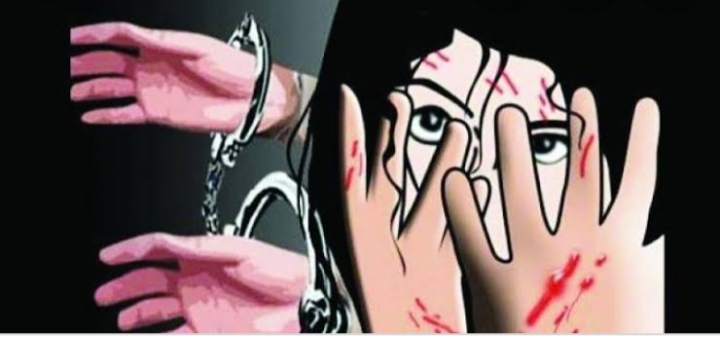


 M's blog